 Indonesia
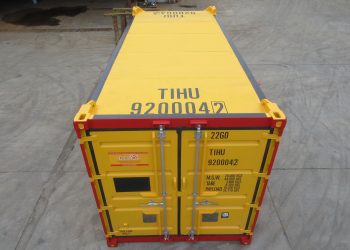
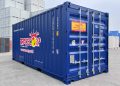
A Dangerous Goods Container is a type of container specifically designed for the storage and shipment of hazardous materials classified under the IMDG Code, such as chemicals, flammable liquids, and toxic substances. This container type is used by the mining, chemical, pharmaceutical, and manufacturing industries worldwide because it prevents the risk of leaks, spills, and dangerous chemical reactions during shipping or storage.
The functions of a Dangerous Goods Container encompass protection of the surrounding environment, worker safety, and compliance with international regulations. This container is constructed from high-strength Corten steel, equipped with a spill containment system (bunded floor), active or passive ventilation, and hazard warning placards conforming to the IMDG Code (International Maritime Dangerous Goods Code) established by the International Maritime Organization (IMO).
Beyond a standard container, the functions of a Dangerous Goods Container include:
- Isolation of Hazardous Materials. The container isolates hazardous materials from the surrounding environment. Its tightly sealed steel structure prevents direct exposure to dangerous chemicals.
- Spill Containment. The container floor features a bunded (sump) design capable of retaining internal liquid spills, meeting EPA standards for secondary containment.
- Hazardous Vapor Control. Active and passive ventilation systems extract dangerous, explosive vapors and keep gas concentrations below the safe threshold (Lower Explosive Limit/LEL).
- Regulatory Compliance. Using certified Dangerous Goods Containers fulfills a company’s legal obligations under the IMDG Code, IMO maritime regulations, and applicable Indonesian land transport regulations.
- Operational Efficiency. Centralized storage in a single container unit reduces workplace accident risk, shortens safety audit times, and cuts dangerous cargo insurance costs.
Dangerous Goods Containers are an increasing necessity for extractive and chemical manufacturing industries, especially in Sumatra, Kalimantan, and Papua, where the distance of worksites from distribution hubs demands stricter on-site storage standards. Tradecorp is a trusted partner for the sale and rental of Dangerous Goods Containers in Indonesia, with fast, transparent, and standardized service.
Features of a Dangerous Goods Container
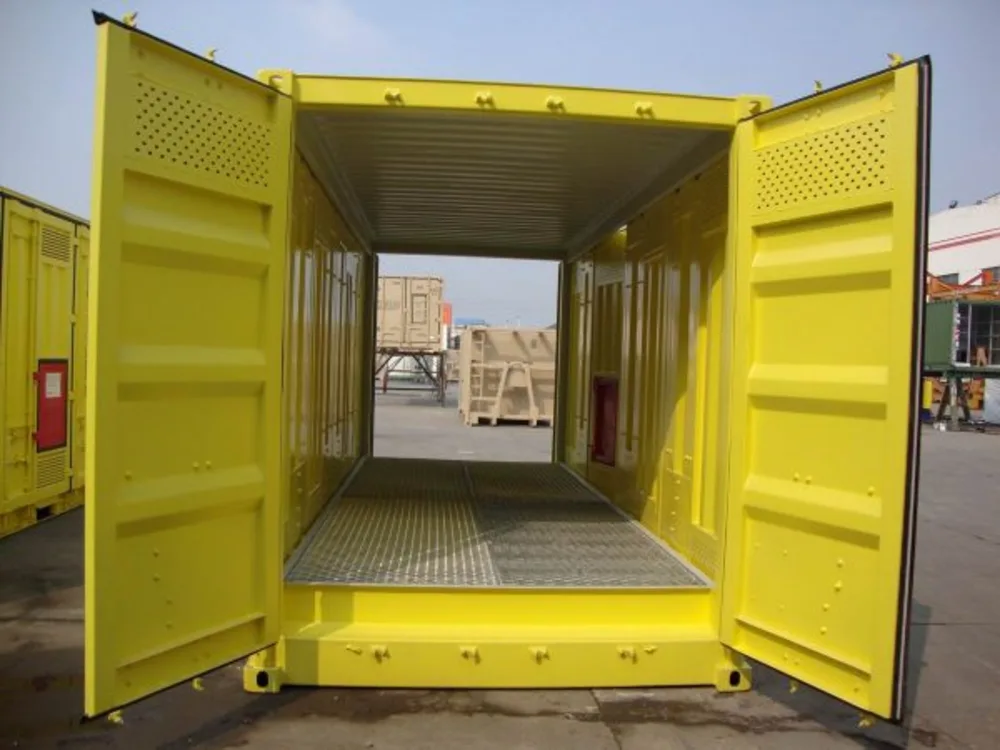
Not all containers can be used to transport Dangerous Goods. Strict technical specifications differentiate a DG container from a standard container. The main features are as follows:
1. High-Strength Corten Steel Structure
The container body is made of Corten steel, resistant to corrosion and mechanical stress. It is tested to withstand stacking loads per CSC (Convention for Safe Containers) standards, including corner lift tests.
2. Bunded Floor (Spill Containment Floor)
The sump-shaped container floor retains liquid volume in the event of a spill. This design is mandatory per EPA secondary containment and IMDG Code standards.
3. Anti-Corrosive Interior Coating
The interior is coated with epoxy or polyurea, resistant to acids, bases, oxidizers, and aggressive chemical solvents, preventing cross-contamination between cargoes.
4. Active and Passive Ventilation System
Spark-proof motor fans and natural ventilation ensure adequate air circulation and prevent the accumulation of hazardous vapors inside the container.
5. Multi-Layer Security Door with Lockbox
A double-locking system and recessed lockbox protect the locking mechanism from physical damage and tampering.
6. Spark-Proof Lighting and Electrical Components
All electrical components (lights, switches, fans) are designed for Class I/Division 2 zones to prevent sparks near flammable vapors.
7. Hazard Placards and Signage
Each container carries standard IMDG warning placards (hazard class, UN number, hazard labels) and “NO SMOKING / NO OPEN FLAME” markings on all exterior sides.
8. Tie-Downs and Pad-Eyes
Pad-eyes are available for securing cargo inside the container and preventing hazardous loads from shifting during transport.
Types of Dangerous Goods Container
Several Dangerous Goods Container types are available, each tailored to specific industry requirements:
1. Standard DG Container (20ft & 40ft)
The most common DG Container type, used for transporting hazardous cargo by sea and land. Equipped with ventilation, bunded floor, and standard IMDG placards.
2. High Cube DG Container
Taller interior height than a standard container (9’6″ vs 8’6″). Ideal for cargo in IBC totes or large drums requiring more vertical clearance.
3. Side-Opening DG Container
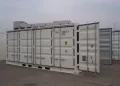
Doors are located on the long side of the container, enabling direct forklift access for loading and unloading drums and totes without repositioning cargo.
4. Hazmat Cabinet/Mini DG Container
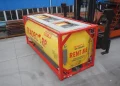
Compact unit (4-10 feet) for chemical storage at a laboratory or indoor warehouse scale. Features a self-closing, fire-rated door.
5. Temperature-Controlled DG Container
Used for hazardous materials requiring temperature control, such as organic peroxides (Class 5.2) that are unstable at high temperatures.
Dangerous Goods Container Sizes
Selecting the right Dangerous Goods Container size requires consideration of cargo volume, shipment frequency, and site infrastructure. The guide below covers available options:
|
Model |
External Dimensions (L × W × H) | Primary Use |
Key Safety Features |
| 8′ Hazmat Container | 8′ × 7′ × 7′ 6″ | Chemical cabinet on a field trailer | Recessed lockbox, pad-eye tie hooks |
| 10′ HC Dangerous Goods | 10′ × 8′ × 9′ 6″ | Fuel storage for remote generators | Dual spill containment pallet + eyewash station |
| 20′ HC Side-Open | 20′ × 8′ × 9′ 6″ | High-volume drum and tote transfer | Full-height side doors for forklift access |
| Hazmat Cabinet | 4′ × 4′ × 7′ | Indoor laboratory or warehouse | Fire-resistant door with auto-close |
IMDG Code Cargo Classifications for Dangerous Goods Containers
The IMDG Code (International Maritime Dangerous Goods Code) is the mandatory global standard established by the IMO for the transport of dangerous goods by sea, in force internationally since 2004. Every cargo loaded into a Dangerous Goods Container must be classified under one of the following 9 classes:
|
IMDG Class |
Hazard Type | Cargo Examples |
Required DG Container Features |
| Class 1 | Explosives | Dynamite, detonators | Impact-resistant construction, specialized signage |
| Class 2 | Gases | LPG, oxygen, chlorine | High ventilation capacity, pressure-rated |
| Class 3 | Flammable Liquids | Petrol, ethanol, acetone | Bunded floor, active ventilation, spark-proof components |
| Class 4 | Flammable Solids | Sulfur, magnesium, sodium | Thermal insulation, strong cargo securing |
| Class 5 | Oxidizers & Peroxides | H₂O₂, KMnO₄ | Segregated storage; refrigeration required for Class 5.2 |
| Class 6 | Toxic & Infectious | Pesticides, cyanide, medical waste | Full sealing, specialized hazard labeling |
| Class 7 | Radioactive | Medical isotopes, nuclear material | Radiation shielding, IAEA certification |
| Class 8 | Corrosive | H₂SO₄, HCl, NaOH | Epoxy/polyurea interior coating |
| Class 9 | Miscellaneous | Lithium batteries, dry ice | Depends on the specific characteristics of the material |
Why Buy a Dangerous Goods Container from Tradecorp?
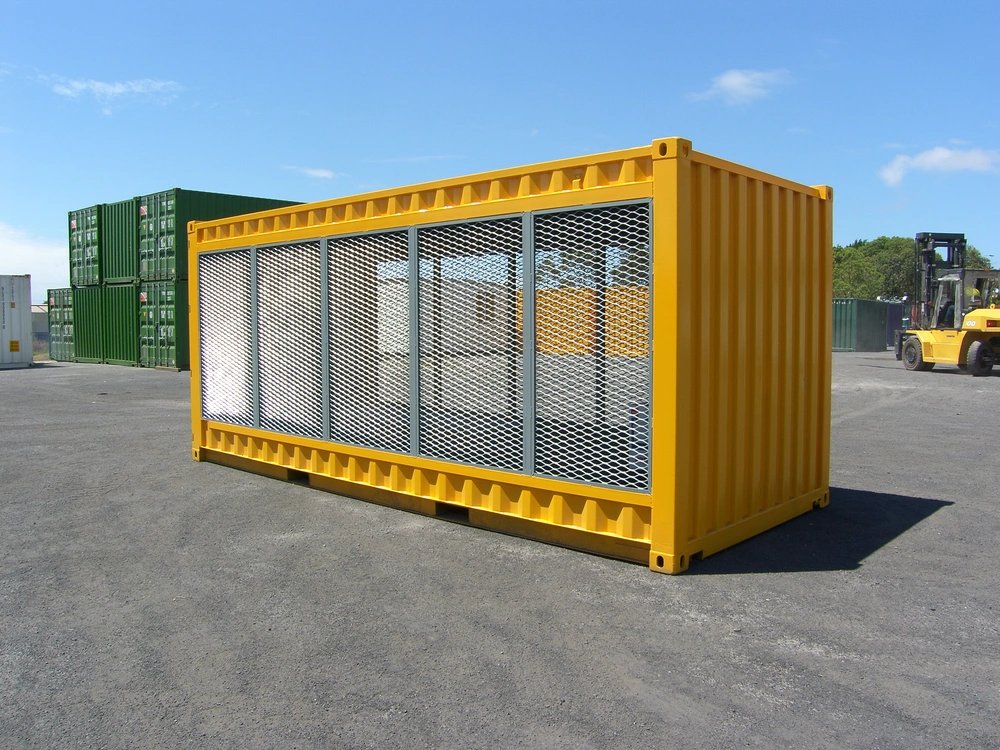
Choosing the right partner for the sale and rental of Dangerous Goods Containers is not a minor decision. It directly concerns operational safety, legal compliance, and business efficiency. Here is why Tradecorp is the right choice:
1. ISO and IMDG Code Certified
All Tradecorp Dangerous Goods Container units are produced and modified to ISO standards and international IMDG Code requirements. Regulatory compliance is handled from the outset.
2. Available for Sale and Rental
Tradecorp offers full flexibility. For long-term needs, purchase new or used units in prime condition. For temporary projects, Dangerous Goods Container rental is available with adjustable durations.
3. Nationwide Delivery Across Indonesia
With depots in Jakarta, Surabaya, Balikpapan, and Sumbawa, Tradecorp understands that field projects cannot afford to wait.
4. Fast and Transparent Service
The ordering process is straightforward: contact the team online, receive a price quote promptly, and the unit is dispatched. No delays, no bureaucracy.
5. Trusted Experience Since 2014
Tradecorp has supported major projects across Indonesia: coal mining in Kalimantan, mining infrastructure in Sumatra, and facilities for international events including the 2018 Asian Games and Formula E Jakarta. This track record is not merely a statistic; it is proof of market trust.
FAQ
What is the main function of a Dangerous Goods Container?
The functions of a Dangerous Goods Container include isolating hazardous materials from the environment, containing hazardous liquid spills, controlling flammable vapors, ensuring IMDG Code regulatory compliance, and protecting worker safety in both storage and shipping contexts.
What is a 20ft Dangerous Goods Container?
A 20ft Dangerous Goods Container is a DG container unit 6.058 meters in length. It is ideal for mid-scale industrial chemical shipments and on-site storage at mining or factory locations with limited space. It can accommodate approximately 80 drums of 200-liter capacity.
What is the difference between a 20ft and 40ft Dangerous Goods Container?
The primary difference is capacity: the 40ft Dangerous Goods Container is twice as long (12.192 m). Choose the 20ft for flexibility and space efficiency in confined sites; choose the 40ft when large-volume storage in a single unit is required.
Where can I buy a Dangerous Goods Container in Indonesia?
Dangerous Goods Containers are available from Tradecorp Indonesia. Tradecorp supplies new and used units in prime condition with ISO and IMDG Code certification, in various sizes, with delivery throughout Indonesia.
Is it possible to rent a Dangerous Goods Container from Tradecorp?
Yes. Tradecorp provides Dangerous Goods Container rental services for short- to medium-term project needs. Rental duration is flexible to suit operational requirements. Contact the Tradecorp team for current rental pricing.
How do I order a Dangerous Goods Container from Tradecorp?
Contact the Tradecorp team via the contact page or quote form at kontainerindonesia.co.id. The team responds promptly, providing technical specifications and a transparent price quote. The process is straightforward and can be completed from anywhere.