 Indonesia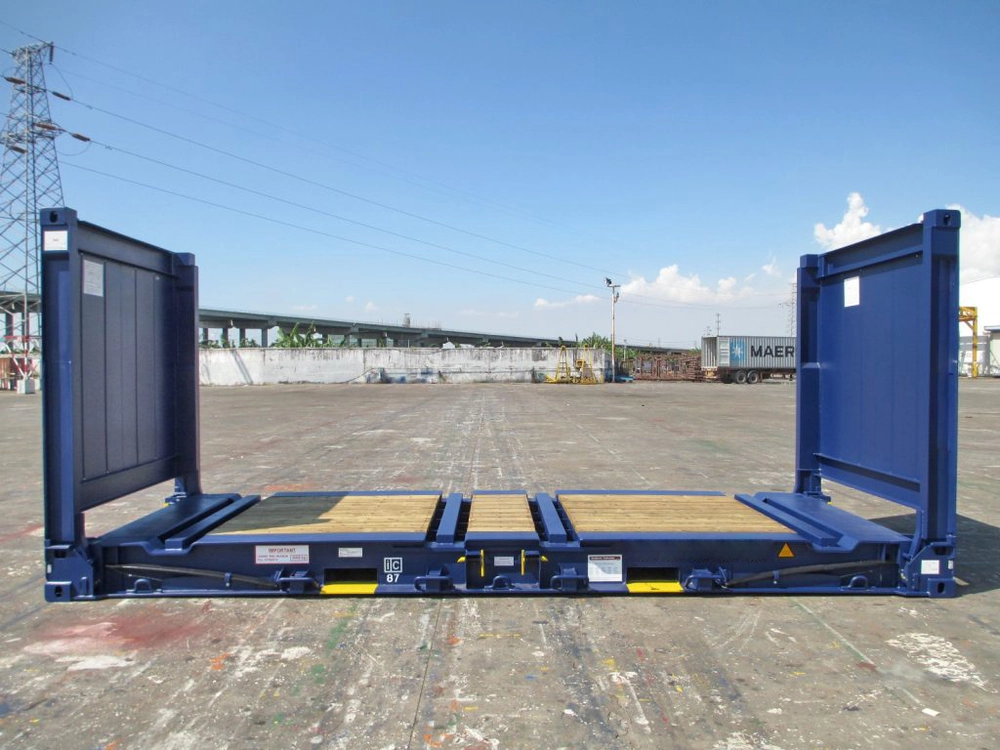
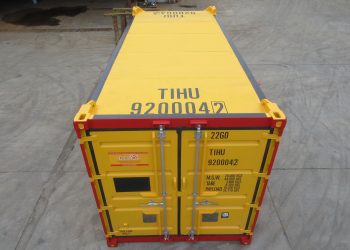
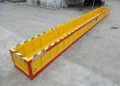
A Flat Rack Container is a type of cargo shipping container designed without a roof and side walls. It consists of a strong base or deck and end walls on both sides. This open structure allows cargo to be loaded from the top, sides, or ends using cranes or forklifts.
Unlike standard dry containers, Flat Rack containers are built to handle heavy loads and out of gauge cargo. This refers to goods that are too large, too heavy, or irregularly shaped so they cannot fit inside enclosed containers. Because of this capability, Flat Rack containers are widely used in construction, energy, automotive, and heavy manufacturing industries worldwide.
These containers are available in two main sizes, 20 feet and 40 feet. They are commonly used in global logistics across sectors such as infrastructure, energy, and even military operations. In Indonesia, Flat Rack units are often used for infrastructure projects and manufacturing industries that require transporting heavy equipment across islands or for export and import activities.
Tradecorp Indonesia acts as a trusted partner by providing Flat Rack Containers for sale or rental with a fast, transparent, and efficient process. Below is a complete overview of their dimensions, types, and uses.
Flat Rack Container Dimensions
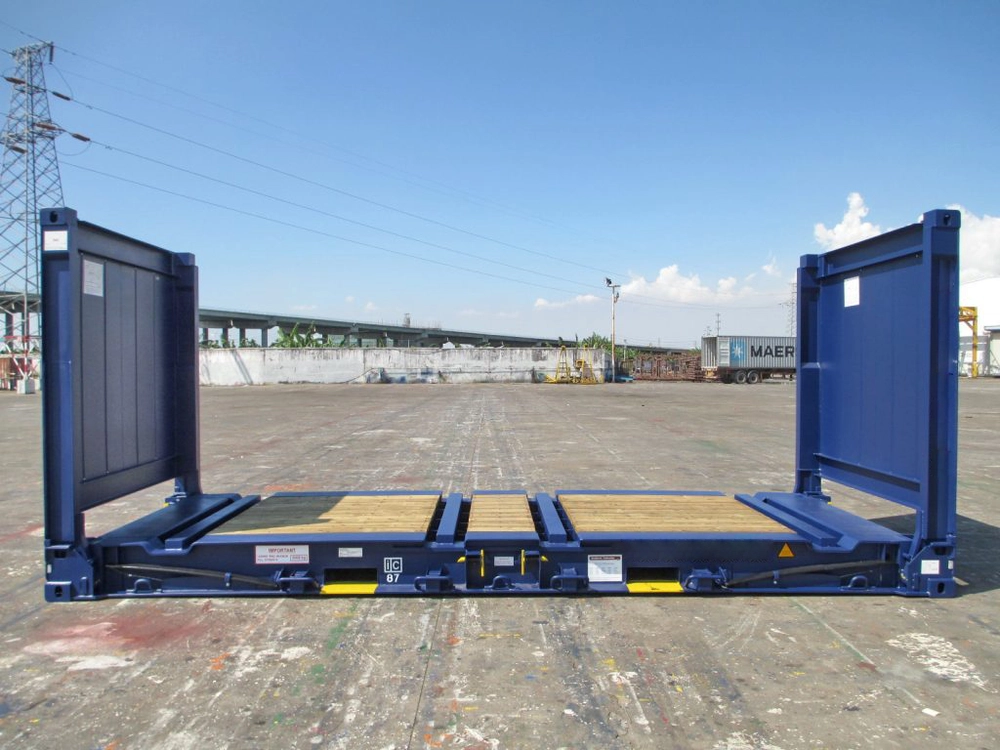
Flat Rack Containers are available in two standard ISO sizes commonly used worldwide. Below are the specifications.
20′ Collapsible Flat Rack
|
Specification |
Imperial |
Metric |
| External Dimensions | L 20′ x W 8′ x H 8’6″ | L 6,058 x W 2,438 x H 2,591 m |
| Tare Weight | 6,610 lbs | 3,000 kg |
| Max Operating Gross Weight | 74,950 lbs | 34,000 kg |
| End Wall Strength | 91,230 newton |
Features include collapsible end walls, Corten steel structure, and hardwood flooring.
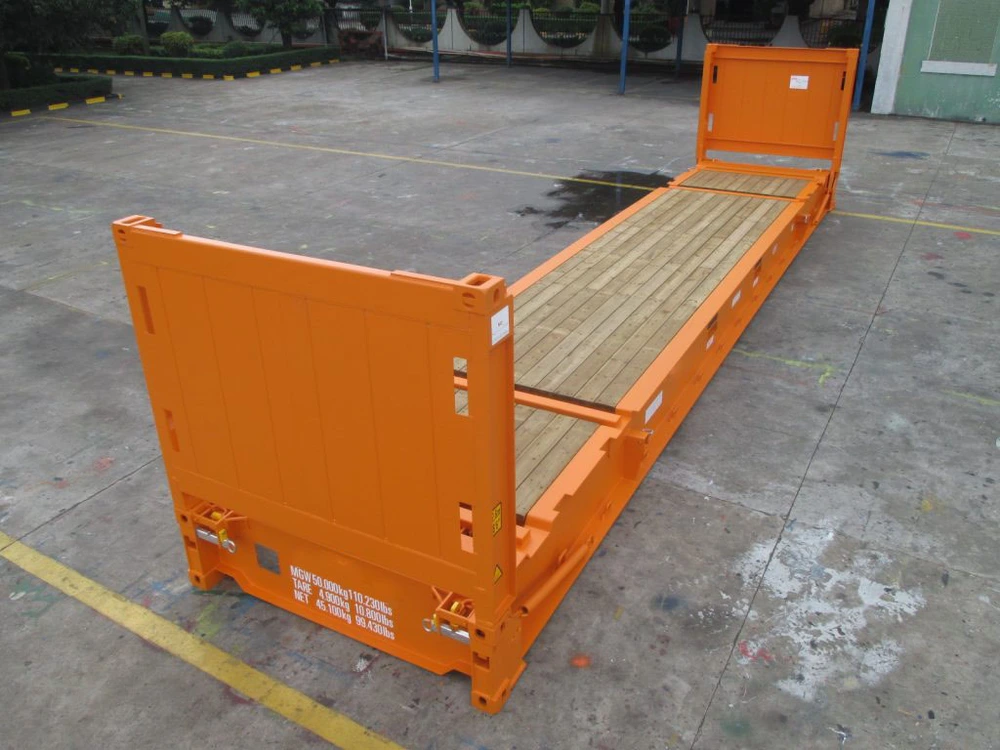
40′ Flat Rack
|
Specification |
Imperial |
Metric |
| External Dimensions | L 40′ x W 8′ x H 8’6″ | L 12,192 x W 2,438 x H 2,591 m |
| Tare Weight | 11,240 lbs | 5,100 kg |
| Max Payload | 104,500 lbs | 47,400 kg |
| Max Cargo (Gross) | 115,740 lbs | 52,500 kg |
Features include collapsible ends, lashing points, forklift pockets, corner castings, and hardwood flooring.
Note that specifications may vary depending on the unit condition and manufacturer. New units are typically equipped with a valid CSC plate for international shipping.
Types of Flat Rack Containers
Flat Rack Containers can be classified based on their end wall design.
1. Collapsible Flat Rack
This type has end walls that can be folded down or removed when the container is empty. It consists of a steel frame base, hardwood flooring, and foldable end walls.
The end walls are strong enough to secure cargo and allow stacking of multiple units. One of its main advantages is space efficiency during return shipping. Up to four empty units can be stacked in the space of a single standard container, which significantly reduces repositioning costs.
This type is suitable for companies with frequent two way shipments, regular routes, and a need to optimize logistics costs.
2. Non Collapsible or Fixed End Flat Rack
This type has permanent end walls that cannot be folded. Its structure is more rigid and provides higher load capacity as well as stronger support.
It is ideal for extremely heavy cargo, uneven load distribution, and one way shipments where return efficiency is not a priority.
Uses of Flat Rack Containers
Flat Rack Containers are designed for out of gauge cargo that cannot fit into standard enclosed containers due to size, weight, or shape.
Their open structure allows flexible loading from multiple directions using cranes and forklifts.
Industries and Cargo Types
|
Industry |
Cargo Type |
| Construction and Infrastructure | Steel beams, girders, pipes, turbines, excavators, bulldozers, cranes |
| Steel and Fabrication | Long beams, steel plates, welded modules |
| Mining and Heavy Industry | Crushers, mills, tracked vehicles, buckets |
| Transportation and Automotive | Trucks, buses, construction vehicles, boats |
| Energy and Power | Wind turbine blades, transformers, generators, boilers |
| Infrastructure | Bridge segments, pipe spools, culverts, precast structures |
| Oil and Gas | Drilling equipment, pipes, offshore components |
| Agriculture | Tractors, irrigation equipment, large machinery |
| Military and Government | Armored vehicles, shelters, field equipment |
How Cargo is Loaded and Transported
Flat Rack Containers function as heavy duty open platforms. Their design provides flexibility for handling oversized cargo.
Loading Process
Cargo is lifted onto the container using cranes or forklifts, or moved from the side. Once positioned, it is secured using lashing rings and winches attached to the deck.
Chains or straps are applied based on the weight and shape of the cargo. Dunnage and edge protection are used to prevent damage. Documentation and proper checks are important to ensure compliance with shipping requirements.
Shipping Process
After securing the cargo, the container is loaded onto a vessel using crane lifting methods. Flat Rack containers can be stacked to optimize space usage on ships.
In certain situations, they can also function as a supporting platform for extremely large cargo that cannot be stored in enclosed areas.
Difference Between Flat Rack Containers and Roll Trailers
|
Feature |
Flat Rack Container |
Roll Trailer |
| Structure | Fixed platform with end walls and no roof or side walls | Wheeled platform with low deck and ramp |
| Mobility | Lifted by crane | Moves using wheels or towing |
| Loading Method | Loaded by crane or forklift | Roll on and roll off loading |
| Size Standard | ISO 20 ft and 40 ft | Variable sizes |
| Main Use | Global oversized cargo transport | Short distance transport with RoRo vessels |
| Handling | Requires crane | No crane required |
| Empty Storage | Collapsible units save space | More difficult to stack |
Flat Rack Containers are more suitable for global multimodal transport, while roll trailers are more efficient for wheeled cargo on short routes.
Flat Rack Container Prices
Estimated prices in Indonesia are as follows.
|
Size |
Price |
| 20 ft Flat Rack | Starting from IDR 45,000,000 |
| 40 ft Flat Rack | Starting from IDR 75,000,000 |
Prices may vary depending on condition, availability, and delivery location.
Why Choose Tradecorp?
Tradecorp Indonesia is not just a container supplier. It is a logistics partner that understands the importance of speed and reliability in handling heavy cargo.
- Available stock ensures no delays.
- Materials are verified and built using durable Corten steel with strong hardwood flooring.
- Units comply with ISO and CSC standards for international shipping.
- Pricing is transparent with no hidden costs.
- The ordering process is simple and efficient. Both purchase and rental options are available.
- Delivery coverage spans across Indonesia.
FAQ
What is the difference between 20 ft and 40 ft Flat Rack?
The 40 ft unit is longer and has a higher payload capacity, making it suitable for large and heavy cargo. The 20 ft unit is more suitable for medium sized equipment.
What is a Collapsible Flat Rack?
It is a Flat Rack with foldable end walls that allows efficient stacking when empty.
How is cargo secured?
Cargo is secured using lashing systems, chains, straps, and protective materials to ensure stability during transport.
Can Flat Rack be used for domestic shipping?
Yes, it is widely used for inter island transport in Indonesia.
Is rental available?
Yes, Flat Rack Containers are available for both sale and rental.
What is the maximum capacity?
The 20 ft units can handle up to 34,000 kg gross weight. The 40 ft units can handle up to 52,500 kg gross weight.