 Indonesia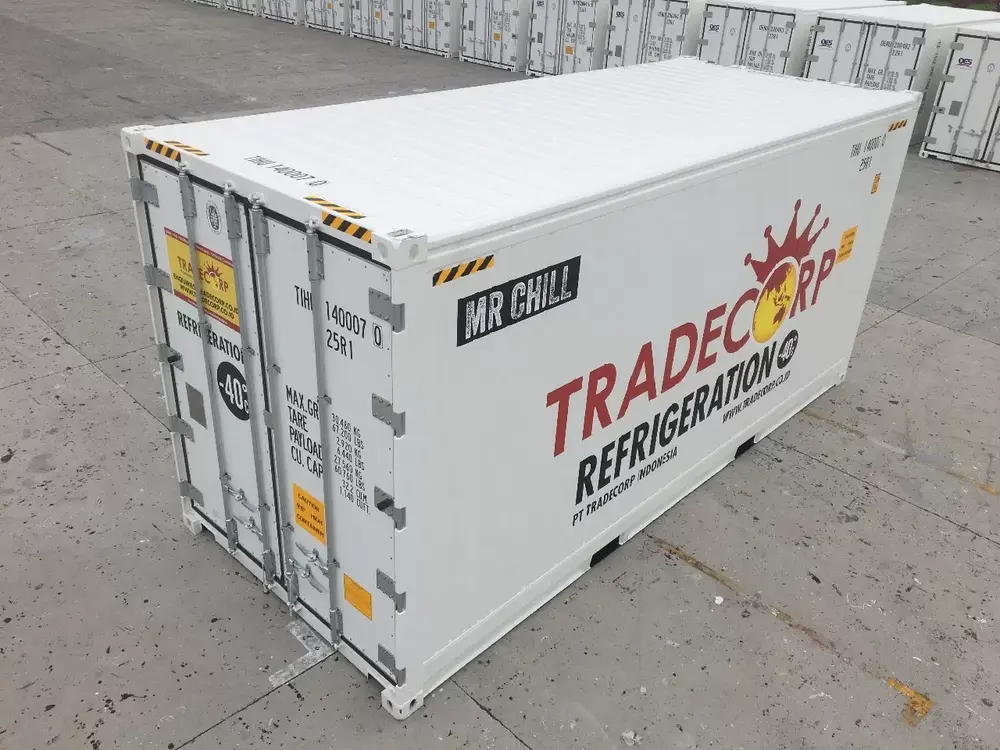
A refrigerated container, or reefer container, is an intermodal shipping container fitted with an integrated refrigeration unit at its front end, specifically designed to transport temperature-sensitive cargo while maintaining a constant internal temperature throughout the journey.
Refrigerated containers play a critical role in the global cold chain, enabling the safe and efficient transport of temperature-sensitive cargo. These refrigerated containers come with an integrated cooling system capable of maintaining internal temperatures from -65°C to +40°C consistently, regardless of extreme external weather conditions.
In Indonesia, demand for refrigerated containers comes from the food, pharmaceutical, and chemical industries, all of which require mobile refrigeration facilities. Refrigerated container users span a wide range of businesses, from local fruit exporters to multinational pharmaceutical companies, all requiring guaranteed product quality from origin to end consumer.
As an overview, here are the key characteristics of a refrigerated container you need to know.
|
Aspect |
Detail |
| Temperature Range | -65°C to +40°C (some models: -40°C to +30°C) |
| Primary Use | Fruits, vegetables, meat, fish, dairy products, pharmaceuticals, vaccines, chemicals |
| Role | Backbone of the global logistics cold chain |
| Construction | Steel plate with PUF (Polyurethane Foam) insulation 50–150 mm thick |
| Available Sizes | 10 feet, 20 feet, 40 feet, including High Cube variants |
| Power Source | Shore power, vessel power system, or portable diesel genset |
In short, a refrigerated container is an asset that protects the quality and value of your products from origin to consumer without compromise.
|
Benefit |
Why Is a Refrigerated Container Important for You? |
| Consistent Temperature Control | Maintains precise temperatures throughout the journey, even in extreme tropical conditions |
| Product Safety and Quality | Prevents contamination and preserves food freshness and the active potency of pharmaceuticals |
| Extended Shelf Life | Significantly reduces spoilage risk, keeping products viable for longer |
| Minimized Losses | Prevents spoilage, reduces costs, and protects your business reputation |
| Global Market Reach | Export perishable products worldwide with guaranteed quality |
| Energy Efficiency | Insulation reduces heat loss and lowers power consumption |
| Portable Storage | Can be deployed as temporary cold storage at any location |
| Weather-Resistant Construction | Thick insulated doors and robust build for long-term outdoor use |
Refrigerated containers are ideal for the following industries:
- Food and Beverage: Dairy products, frozen food, fresh meat, fish, fruits, vegetables, restaurants, and large-scale catering operations.
- Pharmaceuticals: Vaccines, medicines, and medical supplies requiring strict temperature precision.
- Agriculture: Storage and transport of fresh produce for export markets.
- Chemicals: Temperature-sensitive chemical products requiring specialized handling.
- Emergency and Seasonal Storage: Warehouse renovation, inventory overflow, disaster response, and urgent operational needs.
Refrigerated Container Sizes
20-Foot Size
|
Specification |
Dimension |
| Outer Length | 6,058 mm |
| Outer Width | 2,438 mm |
| Outer Height | 2,591 mm |
40-Foot Size
| Specification |
Dimension |
| Outer Length | 12,192 mm |
| Outer Width | 2,438 mm |
| Outer Height | 2,591 mm |
40-Foot High Cube Size
|
Specification |
Dimension |
| Outer Length | 12,192 mm |
| Outer Width | 2,438 mm |
| Outer Height | 2,896 mm |
Refrigerated Container Types and Specifications
Tradecorp offers a range of refrigerated containers engineered to meet the demands of different industries. Understand each type so you can choose the one that best fits your business needs.
1. Standard Refrigerated Container
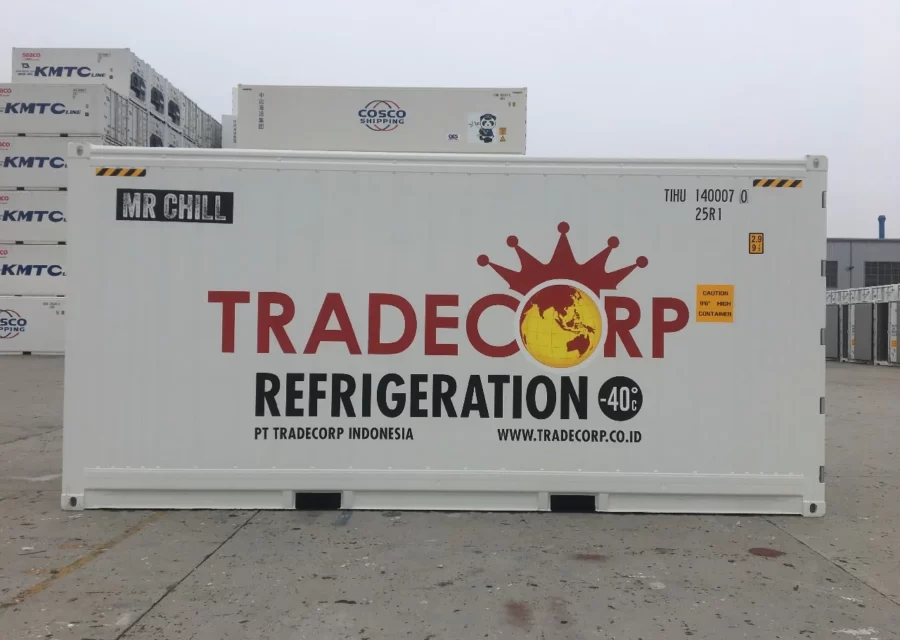
This is the most common and widely used type of refrigerated container in the world. Available in 10-foot, 20-foot, and 40-foot sizes, it is suitable for shipping fruits, vegetables, meat, dairy products, and pharmaceuticals with standard temperature requirements.
| Specification |
Detail |
| Temperature Range | -25°C to +25°C |
| Insulation | PUF (Polyurethane Foam), 50–100 mm thick |
| Floor | T-bar floor for optimal and uniform air circulation |
| Interior | Food-grade surfaces, easy to clean and sanitize |
| Available Sizes | 10ft, 20ft, 40ft, 40ft High Cube |
2. Refrigerated Super Freezer
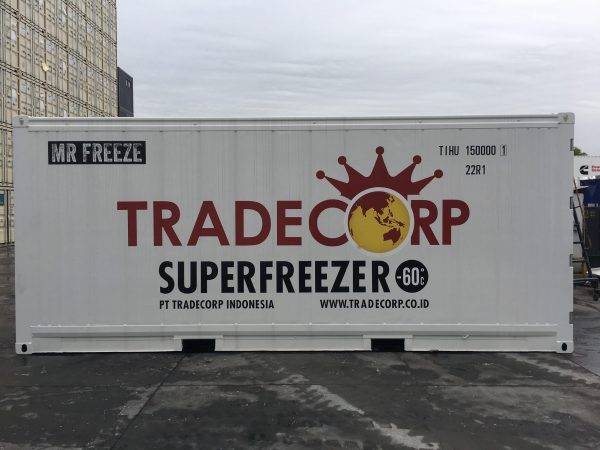
Engineered for cargo requiring extreme freezing temperatures, the Super Freezer refrigerated container can reach as low as -60°C, and even -70°C — making it ideal for exporting sashimi-grade fresh tuna, premium ice cream, and ultra-sensitive pharmaceutical products that cannot tolerate any temperature fluctuation.
| Specification |
Detail |
| Temperature Range | -60°C to -70°C |
| Primary Use | Sashimi-grade tuna, premium ice cream, ultra-sensitive biological pharmaceuticals |
| Insulation | Extra thick for maximum cold performance |
| Key Advantage | Among the refrigerated containers with the lowest temperature capability in its class |
3. Blast Freezer Container
The Blast Freezer Container is designed to freeze cargo extremely rapidly, dropping the temperature of fresh products dramatically in a very short time. This quick-freezing process prevents the formation of large ice crystals that would otherwise damage the product’s texture, nutritional value, and overall quality.
|
Specification |
Detail |
| Primary Function | Quick freezing to rapidly lower temperature while preserving optimal quality |
| Temperature Range | Down to -40°C |
| Key Advantage | Preserves texture, nutritional value, and market value of products after freezing |
| Size | 20ft |
| Ideal For | Fisheries industry, meat processing, large-scale frozen food production |
4. Dual Zone Refrigerated Container
Dual Zone technology allows a single refrigerated container to maintain two different temperature zones simultaneously. This means you can ship fresh produce and frozen products in the same container on the same trip, with two separate temperature requirements, delivering significant logistics cost savings.
Available in two refrigeration unit options:
|
Refrigeration Unit |
Advantage |
| Thermoking T880 Pro | Advanced control system |
| Carrier Thinline | High energy efficiency |
Key benefits of Dual Zone:
- Reduced logistics costs by consolidating two cargo types in a single container;
- Flexibility to ship mixed product types in a single trip;
- Significant operational efficiency for businesses with diverse product ranges.
5. Offshore Refrigerated Container (DNV Certified)
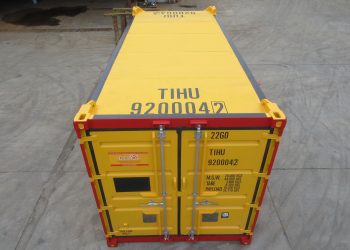
Designed and certified to DNV (Det Norske Veritas) international standards for use in offshore environments, including oil and gas platforms, marine vessels, and offshore installations. Its construction is significantly more robust than a standard refrigerated container, featuring lifting points tested for heavy loads under extreme marine weather conditions.
|
Specification |
Detail |
| Certification | DNV 2.7-1/EN 12079 |
| Application | Offshore platforms, vessels, offshore installations |
| Construction | Reinforced steel with load-validated lifting points |
| Temperature Range | Customized to offshore cargo requirements |
| Compliance | Meets international offshore safety regulations |
How a Refrigerated Container Works
A refrigerated container operates on a vapor compression refrigeration cycle, using refrigerant to continuously transfer heat from inside the container to the external environment. The cooling cycle consists of the following stages.
Stage 1: Compression
The compressor draws in low-temperature, low-pressure refrigerant gas from the evaporator and mechanically compresses it. As a result, both the pressure and temperature of the gas rise sharply.
Stage 2: Condensation
The hot, high-pressure gas flows to the condenser located on the outside of the container. Here, air or seawater cools the refrigerant, converting it into a high-pressure liquid while releasing heat to the external environment.
Stage 3: Expansion
The refrigerant liquid passes through an expansion valve (throttling device). Its pressure drops sharply, producing a low-temperature, low-pressure liquid ready to absorb heat.
Stage 4: Evaporation
The cold liquid enters the evaporator inside the container. It absorbs heat from the air within the unit, evaporates into gas, and effectively lowers the interior temperature.
Stage 5: Return to Compressor
The evaporated refrigerant gas is drawn back into the compressor to begin a new cycle. This process runs continuously without interruption for as long as the container is in operation.
Refrigerated containers come equipped with a digital control panel that enables:
- precise temperature setting (standard range: -30°C to +30°C; super freezer: down to -70°C);
- flexible temperature adjustment based on cargo type;
- real-time machine error display and system alerts;
- remote monitoring via telematics and GPS for full cargo visibility.
Reefer Cargo: What Can Be Shipped in a Refrigerated Container?
Reefer cargo refers to all types of cargo requiring strict temperature control throughout the shipping process. Below is a complete guide to reefer cargo categories and their ideal temperature ranges.
|
Cargo Category |
Product Examples |
Ideal Temperature |
| Fresh Produce | Fruits, vegetables, cut flowers | +2°C to +13°C |
| Dairy Products | Milk, cheese, yogurt, butter | 0°C to +4°C |
| Meat and Seafood | Beef, chicken, fish, sashimi-grade tuna | -18°C to -25°C |
| Frozen Food | Ice cream, frozen ready-to-eat meals | -18°C to -25°C |
| Pharmaceuticals | Vaccines, medicines, biological products | +2°C to +8°C |
| Chemicals | Temperature-sensitive chemical products | Per product specification |
| Plants | Seedlings, fresh cut flowers | +5°C to +15°C |
Factors That Influence Refrigerated Container Pricing
Refrigerated container pricing is influenced by several factors:
|
Price-Determining Factor |
Description |
| Size | 20ft vs 40ft vs 40ft High Cube |
| Type | Standard, Super Freezer, Blast Freezer, Dual Zone, Offshore DNV |
| Unit Condition | New vs well-maintained used/refurbished |
| Refrigeration Unit Brand | Carrier, Thermoking, and others |
| Usage Scheme | Purchase (full ownership) vs rental (short-term/long-term) |
Check Refrigerated Container Pricing at Tradecorp
Tradecorp is Indonesia’s trusted container provider, with years of proven experience delivering refrigerated logistics solutions across multiple industries. We understand that every business has unique requirements. That is why Tradecorp offers personalized consultation services to help you identify the right refrigerated container for your operation.
Why choose Tradecorp?
- Complete refrigerated container stock: 10ft, 20ft, 40ft, High Cube, Super Freezer, Blast Freezer, Dual Zone, Offshore DNV.
- Sales and rental with flexible schemes.
- Transparent pricing with no hidden costs.
- Delivery across all regions of Indonesia.
- Professional team ready for consultation and technical support.
- Fast process from inquiry to delivery, with no complex procedures.
Contact Tradecorp today and get the best refrigerated container pricing tailored directly to your business needs.
FAQ
What temperature does a refrigerated container maintain?
Refrigerated container temperatures vary by type. The Standard Reefer maintains between -25°C and +25°C, while the Super Freezer can reach down to -70°C. A heating mode of up to +40°C is also available for certain cargo types.
What is reefer cargo?
Reefer cargo refers to all types of cargo requiring temperature control during shipment, including fruits, vegetables, meat, seafood, dairy products, vaccines, medicines, and temperature-sensitive chemicals.
What is a Freezer Container, and how does it differ from a standard reefer?
A Freezer Container is a refrigerated container operated at freezing temperatures, typically below -18°C, for transporting and storing frozen products such as meat, fish, ice cream, and frozen food. The distinction from a standard reefer lies in its lower operational temperature range and the greater intensity of its refrigeration system.
Where can I buy or rent a refrigerated container in Indonesia?
Tradecorp Indonesia provides refrigerated container sales and rental services with complete stock, transparent pricing, and nationwide delivery. Contact our team for a consultation and the best offer tailored to your business needs.