 Indonesia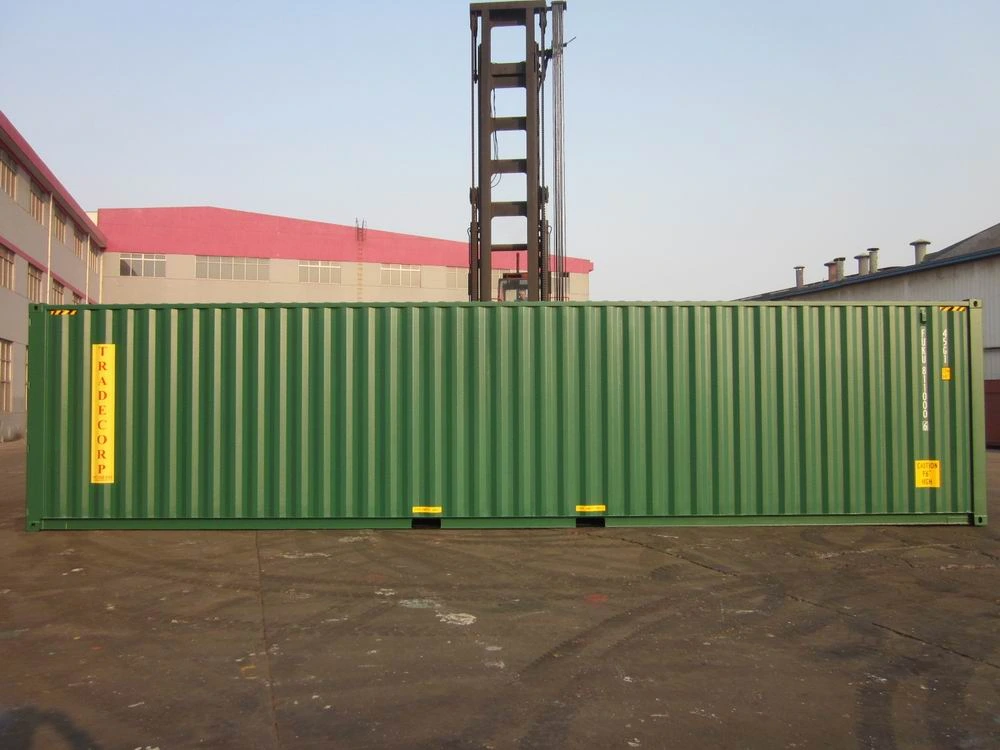
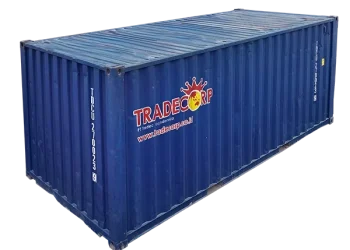
What is a 40ft container? A 40ft container is an internationally standardized shipping unit measuring 40 feet (12.192 meters) in length. It is twice the size of a 20ft container, making it the preferred choice for shipping large-volume cargo in a single, more efficient, and cost-effective haul.
The dimensions of a 40ft container comply with ISO 668, the international standard that ensures compatibility across ships, trucks, and railways worldwide. This means a 40ft container moves seamlessly across borders and multiple modes of transport with no adjustments needed.
Daftar isi
- 1 What are the Dimensions of a 40ft Container in Meters?
- 2 What is the Cubic Capacity of a 40ft Container?
- 3 How Many Tons Can a 40ft Container Hold?
- 4 40ft Container vs. 20ft Container: Which One Do You Need?
- 5 How Many Pallets Fit in a 40ft Container?
- 6 Types of 40ft Containers
- 7 40ft Container Prices at Tradecorp Indonesia
- 8 FAQ
- 9 Conclusion
What are the Dimensions of a 40ft Container in Meters?
Best Shipping Containers for Transport Large Volume Cargo


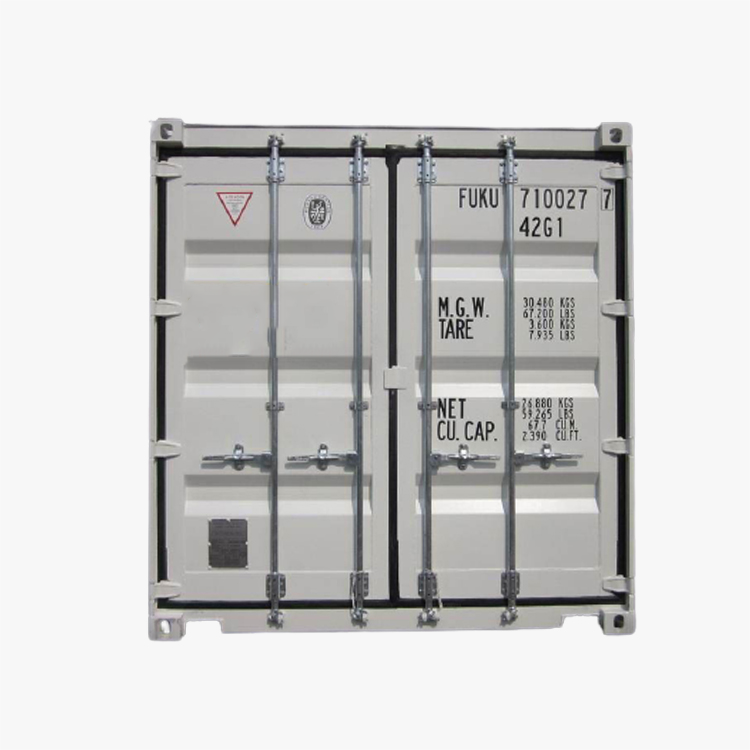

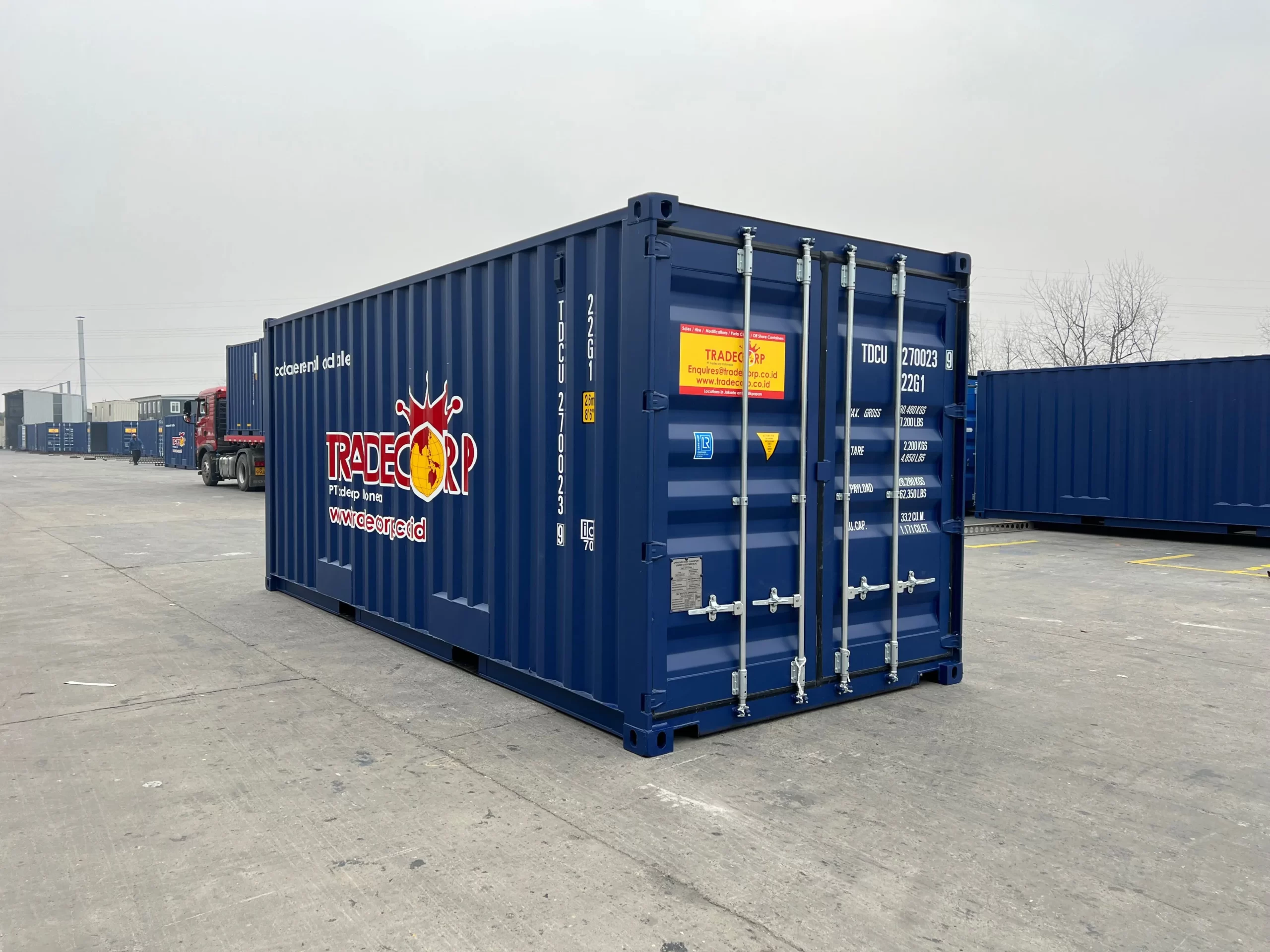

A 40ft container comes in two variants: standard and high cube. The only difference between the two is height.
Standard 40ft Container Dimensions
|
Dimension |
Exterior |
Interior |
| Length | 12.192 m | 12.045 m |
| Width | 2.438 m | 2.309 m |
| Height | 2.591 m | 2.379 m |
40ft High Cube Container Dimensions
|
Dimension |
Exterior |
| Length | 12.192 m |
| Width | 2.438 m |
| Height | 2.896 m |
Quick note: A 40ft high cube container is approximately 30 cm taller than a standard unit, going from 2.591 m up to 2.896 m. That extra height translates directly into more cargo volume, making it ideal for lightweight, high-volume shipments like furniture, garments, or packaged goods.
What is the Cubic Capacity of a 40ft Container?
The cubic capacity of a 40ft container varies by unit type. Here is the full breakdown:
|
Container Type |
Volume (m³) |
| General Purpose | 67.7 m³ |
| General Purpose High Cube | 76.3 m³ |
| Open Top | 65.9 m³ |
| Open Top High Cube | 75.1 m³ |
| Refrigerated | 67.89 m³ |
| Refrigerated High Cube | 67.0 m³ |
The General Purpose 40ft container is the most widely used, with a volume of 67.7 m³ for the standard unit. The High Cube version adds roughly 8.6 m³, a meaningful gain when you are shipping bulky, lightweight cargo.
How Many Tons Can a 40ft Container Hold?
Weight in a 40ft container is broken into three components: MGW (maximum gross weight), tare (empty weight), and payload (net cargo capacity).
Maximum Gross Weight (MGW)
|
Container Type |
MGW |
| General Purpose | 30.48 tons |
| General Purpose High Cube | 30.48 tons |
| Open Top | 32.50 tons |
| Open Top High Cube | 32.50 tons |
| Refrigerated | 35.00 tons |
| Refrigerated High Cube | 35.00 tons |
Tare Weight (Empty Container)
|
Container Type |
Tare |
| General Purpose | 3,420 kg |
| General Purpose High Cube | 3,520 kg |
| Open Top | 3,740 kg |
| Open Top High Cube | 4,060 kg |
| Refrigerated | 4,240 kg |
| Refrigerated High Cube | 4,580 kg |
Cargo Payload (Net)
|
Container Type |
Payload |
| General Purpose | 27,060 kg (27.06 tons) |
| General Purpose High Cube | 26,960 kg (26.96 tons) |
| Open Top | 28,760 kg (28.76 tons) |
| Open Top High Cube | 28,440 kg (28.44 tons) |
| Refrigerated | 30,760 kg (30.76 tons) |
| Refrigerated High Cube | 30,420 kg (30.42 tons) |
Note: MGW for a standard 40ft container is set at 30,480 kg under ISO 668. Payload is calculated by subtracting tare weight from MGW. Tare figures may vary slightly between manufacturers.
40ft Container vs. 20ft Container: Which One Do You Need?
|
Specification |
20ft Container |
40ft Container |
| Length | 6.058 m | 12.192 m |
| Width | 2.438 m | 2.438 m |
| Height | 2.591 m | 2.591 m |
| Volume | ~33.2 m³ | ~67.7 m³ |
| Tare | 2,080 kg | 3,420 kg |
| Payload | ~28,400 kg | ~27,060 kg |
| MGW | 30,480 kg | 30,480 kg |
A 20ft container is lighter and carries a marginally higher payload, but a 40ft container delivers twice the volume. An FCL 40ft container becomes the smarter choice once your load reaches 50 m³ or more than 18 tons, where the cost-per-CBM rate drops significantly.
How Many Pallets Fit in a 40ft Container?
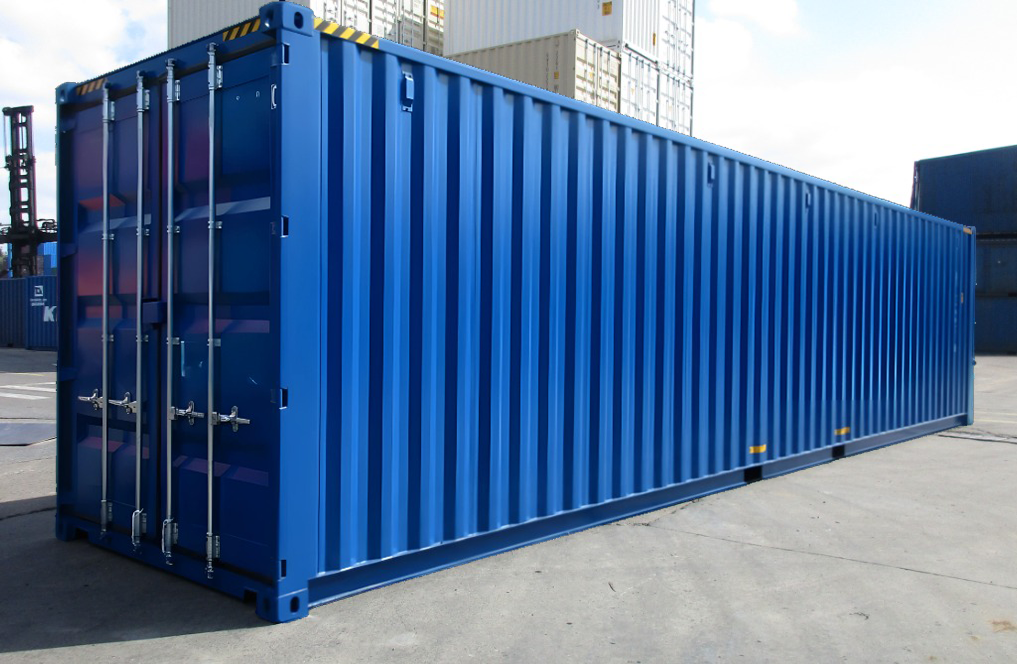
For a General Purpose 40ft container:
- Euro pallets (1.20 m × 0.80 m): 24 to 25 pallets when arranged tightly on the floor
- US standard pallets (40″ × 48″): typically 20 to 21 per layer
- Exact counts depend on pallet overhang, carton height, and weight distribution
Types of 40ft Containers
40ft containers come in a range of types, each built for a specific kind of cargo:
- General Purpose is the standard workhorse used for dry cargo including electronics, furniture, textiles, and consumer goods.
- Open Top features an open roof design for cargo that is too tall for standard doors or must be crane-loaded, such as heavy machinery or construction materials.
- Flat Rack/Platform has no side walls and is built for oversized cargo like large vehicles, steel pipes, and heavy industrial equipment.
- Open Side has side-opening doors for easy loading and unloading along the full length of the container.
- Refrigerated (Reefer) comes with an integrated refrigeration system for temperature-sensitive cargo including fresh produce, seafood, and pharmaceuticals.
- Insulated/Thermal maintains temperature without an active cooling unit and is ideal for semi-temperature-sensitive goods.
- ISO Tank Container is a tank-shaped unit for bulk liquids, gases, or liquid chemicals.
- Tunnel Container has doors at both ends for simultaneous two-direction access during loading and unloading.
40ft Container Prices at Tradecorp Indonesia
|
Container Type |
Price |
Condition |
| 40ft General Purpose | IDR 27,000,000 | As Is |
| 40ft HC General Purpose | IDR 27,500,000 | As Is |
| 40ft Open Top | IDR 65,000,000 | Cargo Worthy |
| 40ft Flat Rack | IDR 75,000,000 | As Is |
| 40ft HC Reefer | IDR 525,000,000 | Brand New 2024 |
Prices are subject to change based on market conditions and stock availability. Contact the Tradecorp team for the latest pricing.
FAQ
What are The Dimensions of a 40ft Container in Meters?
A standard 40ft container has exterior dimensions of 12.192 × 2.438 × 2.591 meters (L × W × H). The high cube version measures 12.192 × 2.438 × 2.896 meters. Both comply with ISO 668, the international standard for freight container sizing.
What is The Difference between a 40ft Standard and 40ft High Cube Container?
The only difference is height. Standard containers have a maximum height of 2,591 mm (8’6″), while high cube containers stand at 2,896 mm (9’6″) tall. That extra 30 cm adds approximately 8.6 m³ of usable volume, which is a significant advantage for lightweight, high-volume cargo.
How Many Cubic Meters is a 40ft Container?
A 40ft General Purpose container holds 67.7 m³. The high cube version reaches 76.3 m³. Open Top standard is 65.9 m³, and Refrigerated is approximately 67.89 m³. Volume varies by container type.
How Many Tons Can A 40ft Container Hold?
A standard 40ft General Purpose container has a payload of 27,060 kg (27.06 tons). The high cube version carries 26,960 kg (26.96 tons), slightly less because the unit itself weighs about 100 kg more when empty.
What is The Interior Dimension of A 40ft Container?
The internal dimensions of a standard 40ft container are 12.045 m long, 2.309 m wide, and 2.379 m high. These are the usable dimensions for loading cargo, which are smaller than the exterior due to wall thickness.
How Many Pallets Fit in a 40ft Container?
A 40ft General Purpose container fits 20 to 21 US standard pallets or 24 to 25 Euro pallets per layer. Exact counts depend on pallet overhang, carton height, and weight distribution.
Can a 40ft Container be Converted Into a Home or Office?
Yes. 40ft containers, especially General Purpose and High Cube units, are widely converted into homes, portable offices, cafés, and workshops. Their generous length provides a flexible, spacious interior for a wide range of non-cargo uses.
When Should I Use a 40ft Container Instead of a 20ft Container?
A 40ft container is the smarter choice once your load hits 50 m³ or exceeds 18 tons. At that point, the cost per cubic meter of an FCL shipment drops significantly compared to booking two separate 20ft units.
What International Standard Governs 40ft Container Dimensions?
40ft container dimensions are governed by ISO 668 (Series 1 Freight Containers: Classification, Dimensions, and Ratings), set by the International Organization for Standardization. This ensures all containers are fully compatible with global port infrastructure, vessels, trucks, and rail systems.
How Long Does a 40ft Container Last?
A 40ft container is constructed from Corten steel, which is naturally resistant to corrosion. With proper maintenance, a unit can last 20 to 25 years in active cargo service, and significantly longer when repurposed for storage or structural use.
How Many Meters is a 40ft Container?
A 40ft container measures exactly 12.192 meters in length and 2.438 meters in width, in compliance with international ISO standards. This is not simply a unit conversion. It is an officially recognized dimension used globally across intermodal freight shipping systems.
What is The Width of a 40ft Container in Meters?
A 40ft container has exterior dimensions of 12.19 meters in length, 2.44 meters in width, and 2.59 meters in height. The 2.438-meter exterior width applies to all 40ft container variants, both standard and high cube. The interior width is 2.309 meters, which is the actual usable space available for arranging cargo or pallets inside the unit.
What is a TEU and How Many TEUs is a 40ft Container?
TEU stands for Twenty-foot Equivalent Unit, the standard measurement for container capacity. One 40ft container equals 2 TEUs. Two 20ft containers are equivalent to one 40ft container, which is also referred to as an FEU (Forty-foot Equivalent Unit). This unit of measurement is used universally by ports, shipping lines, and cargo senders worldwide to calculate loading capacity.
What Types of Cargo Are Suitable for a 40ft General Purpose Container?
A General Purpose 40ft container is used for standard dry cargo that is not oversized, overweight, or in bulk form. This includes electronics, furniture, textiles, plastic products, dry food, and consumer goods. For cargo that is too tall or too long, an Open Top container fitted with a waterproof tarpaulin in place of a roof is the right choice. For oversized cargo such as heavy machinery or vehicles, a Flat Rack fitted with lashing rings to secure the load is the recommended option.
What is The Difference Between a 40ft Container and a 45ft Container?
A 45ft container measures 13.72 meters in length and is generally used in Europe and a number of other countries as a road trailer. 48ft and 53ft containers exist as well, but their use is limited to overland transportation in North America. Around 90% of containers worldwide use the standard lengths of 20 feet or 40 feet. A 40ft container remains the most universally compatible option because it works with almost all port facilities, vessels, and truck fleets around the world.
How many Cartons Fit Inside a 40ft Container?
The number of cartons a 40ft container can hold depends heavily on the dimensions of each individual carton. As a general reference, a 40ft container can accommodate approximately 22 standard pallets or 24 Euro pallets, with a total volume of around 67 cubic meters. The more compact the packaging design and the more efficiently the cargo is arranged, the more cartons can be loaded into a single unit.
Can a 40ft Container be Used for Hazardous Cargo (Hazmat)?
Yes, hazardous cargo can be shipped in a 40ft container as long as it complies with the IMDG Code (International Maritime Dangerous Goods Code), is accompanied by an MSDS (Material Safety Data Sheet), carries the correct UN number and proper labels or placards, and receives prior approval from the shipping line. Hazmat shipments require strict documentation and early coordination with a freight forwarder.
Can a 40ft Container be Converted into a Home or Office?
Yes. A 40ft container can be converted into a mobile office for use as a temporary or permanent workspace at construction sites, remote locations, or other areas. Its generous length also makes it suitable for conversion into residential spaces, cafés, workshops, or creative studios, all with a solid, weather-resistant structure.
What is an FEU and How is It Different from a TEU?
FEU stands for Forty-foot Equivalent Unit. Two TEUs equal one FEU. In practical terms, one 40ft container = 1 FEU = 2 TEUs. This measurement is used to calculate vessel and terminal capacity with greater accuracy, particularly as the industry is increasingly dominated by 40ft container units.
What is The Door Opening Height of a 40ft Container?
The door opening of a 40ft container is 2.34 meters wide and 2.28 meters tall. These door dimensions are smaller than the interior dimensions of the unit, so this needs to be accounted for when loading oversized cargo. For cargo that is too tall to fit through standard doors, an Open Top container is the solution, as it allows loading from above using a crane.
Is a 40ft Container Waterproof and Windproof?
Yes, ISO-certified units are rated Wind and Water Tight (WWT), but condensation can still form inside the container. It is therefore always advisable to add desiccants as a precaution. A 40ft container is typically fitted with four small mesh-covered vents to prevent insects from entering. However, these vents do not completely eliminate the risk of condensation during shipping.
What is “Container Rain” and How Can It be Prevented?
Container rain occurs when the air and cargo inside the container are warm and humid, and the container then moves into a cooler environment. The steel walls of the container absorb ambient temperature rapidly, causing the air inside to lose its ability to hold moisture, which then condenses and drips onto the cargo. Desiccants are a low-cost solution that absorb excess moisture from the air, reducing condensation inside the container. They are available as hanging bags on the walls, units placed on the floor, or as a coating applied to the ceiling and interior walls.
What Material is The Floor of a 40ft Container Made from?
Plywood is the most commonly used flooring material in shipping containers. The most common types are tropical hardwoods such as Apitong and Keruing. Plywood is chosen for its durability, light weight, and moisture resistance. Its drawback is that it is treated with antifungal agents and pesticides. Bamboo is an increasingly popular alternative because it is treated with lighter chemicals than plywood, making it safer for use in containers converted into homes or offices.
What Happens If a 40ft Container is Loaded Beyond Its Weight Limit?
Loading a container beyond its weight limit is illegal and dangerous. An overweight container may be rejected at the port or fined at a weighbridge. Furthermore, an excessively heavy container risks collapsing when stacked on a vessel or causing a truck accident during overland transport.
Is a 40ft Container Suitable for Agricultural Cargo?
Yes. A 40ft container is widely used by farmers and producers for grain storage, cold storage (when converted into a reefer unit), storage of heavy equipment, and even for indoor crop cultivation. The weather-resistant structure of the container and its adaptability make it a reliable solution for the agricultural industry.
What is Cargo Worthy (CW) and How Does It Differ From Other Container Conditions?
A container with Cargo Worthy certification has been inspected and declared fit for international cargo shipment. The inspection covers the roof, door seals, and floor condition to ensure the container can keep cargo safe and dry throughout the journey. This differs from As Is, which is sold without any certified fitness guarantee, and from Wind and Water Tight (WWT), which only guarantees resistance to wind and water but does not certify the unit as fit for international ocean freight.
How Many Vents Does a 40ft Container Have?
A 40ft container is typically fitted with four vents measuring 8 × 2 × 1 inches, covered with mesh to prevent insects from entering. These vents are kept as small as possible to prevent water ingress during ocean shipping, but condensation can still occur.
How Do I Calculate How Much Desiccant a 40ft Container Needs?
The air volume in a standard 40ft container is approximately 67 cubic meters. After subtracting the volume of the cargo, the remaining air space is what contains moisture and needs to be controlled by desiccants. For a fully loaded container with 50 to 60 cubic meters of cargo, the remaining 10 to 15 cubic meters of air space still needs to be managed. As a guide for short haul shipments of around 30 days, dry cargo in a 40ft container requires approximately 10 desiccant pole units, while wet cargo requires approximately 12 units.
Is a 40ft High Cube Container Better than a Standard Unit?
Not always. A high cube adds approximately 12% more volume but also carries a slightly higher tare weight. The high cube is most advantageous for lightweight, high-volume cargo such as furniture, plastic products, or textiles. For dense, heavy cargo that does not require extra vertical space, a standard unit is sufficient and is typically easier to find and more affordable.
How Many 40ft Containers Can Be Stacked on Top of Each Oher?
According to ISO guidelines, stacking of up to nine containers is permitted, depending on the maximum weight the bottom container can bear. A standard ISO container can withstand a stacking load of up to 192 metric tons on its four corner posts. This means the bottom container can theoretically support six fully loaded 40ft containers stacked above it.
What is a CSC Plate and why is It Important for a 40ft Container?
Containers carry a label containing information on size, type, weight limits, and stacking capacity. Shipping lines are required to ensure containers are not loaded beyond the maximum gross weight stated on the CSC plate. The CSC plate contains key information including the safety approval number, date of manufacture, unit number, maximum operating weight, permitted stacking load limit, and the racking test value which indicates structural strength under lateral load. The CSC plate is the official proof that a container has passed inspection and meets international safety standards for cross-border shipping.
How Do I Stack 40ft Containers Correctly and Safely?
When stacking containers of different sizes, a larger 40ft container should be placed on top of two 20ft containers so that all four corner posts rest on the corner posts of the containers below, maintaining stack stability. Containers stacked on a vessel are positioned in same-size columns. They are then locked with twist locks or secured with lashing rods, while the outermost units of a block are lashed to prevent them from tipping over due to vessel movement at sea.
What are The Guidelines for Cargo Weight Distribution Inside A 40ft Container?
As a practical guide, the weight split between the two halves of the container should not exceed 60:40. The balance from left side to right side should be as close to 50:50 as possible. Always place the heaviest items on the floor and toward the center of the container’s floor area. According to logistics experts, 65% of cargo damage is caused by improper packing or securing. Good weight distribution is not only about efficiency. It is also a matter of cargo handling safety throughout road, sea, and port transfer operations.
What is SOLAS VGM and Why is It Mandatory for a 40ft Container?
SOLAS regulations require the Verified Gross Mass (VGM) of every packed container to be submitted to the shipping line before the container is loaded onto a vessel. This requirement has been in force since 2016 and aims to prevent accidents caused by undetected overweight containers. Shippers must either physically weigh the packed container or calculate the VGM by adding the weight of all contents to the tare weight of the container itself.
How do I Maintain a 40ft Container to Extend Its Lifespan?
Annual routine inspections are strongly recommended, covering welds, door hinges, floor condition, and any physical damage. For minor surface damage, the Corten steel patina layer renews itself within days to weeks. To keep the container in good condition, a few simple steps each year are sufficient: check for rust and dents, touch up with rust-resistant paint on any flaking areas, lubricate door hinges and locking bars, inspect the door rubber seals, and clear the roof of leaves and standing water.
Is Surface Rust on a 40ft Container Dangerous?
Surface rust is the most common and least serious form of corrosion found on containers. It is a thin layer of iron oxide that is cosmetic in nature, forming when steel is exposed to oxygen and moisture. Surface rust on Corten steel is often a sign that the protective mechanism is working as intended, not a sign of structural failure. What requires attention is pitting rust and deeper structural rust, as these types need immediate repair before they compromise the structural integrity of the container.
What is The CTU Code and How Does It Relate to Loading Cargo into a 40ft Container?
The CTU Code (Cargo Transport Unit Code) is an international code of practice published by the IMO (International Maritime Organization), ILO, and UNECE. It provides comprehensive guidance on packing and loading cargo into transport units including shipping containers. The CTU Code covers cargo securing rules using blocking, bracing, and lashing techniques, and serves as a mandatory reference for shippers, freight forwarders, and terminal operators worldwide.
How Long Does It Take to Load a 40ft Container?
Manual loading typically takes 2 to 4 hours for a standard 40ft container, depending on cargo complexity and the size of the workforce. With a pre-prepared loading plan using container loading software, this time can be reduced to 1 to 2 hours because the team already knows exactly where each item will be placed before the loading process begins.
When Should I Use FCL Instead of LCL for a 40ft Container?
LCL (Less than Container Load) is more economical when your cargo fills less than 30% of the container capacity, as you share space with other shippers and pay per CBM. FCL (Full Container Load) generally becomes more economical once cargo utilization exceeds 50%, as it offers faster transit times, less handling, and better security. For a 40ft General Purpose container, the FCL break-even point typically sits at around 15 to 20 CBM depending on the route and prevailing freight rates.
What is a “One-Trip Container” for a 40ft Container?
A one-trip container is a unit that has only been used once, specifically for the journey from its manufacturing facility (commonly in China) to its destination country. A brand-new 40ft container offers maximum durability with zero dents, rust, or floor damage, a lifespan of 25 to 30 years with minimal maintenance, and watertight doors with intact seals. One-trip containers are a popular choice because their condition is close to brand new, yet they are more affordable than units that have never been used at all.
Best Shipping Containers for Transport Large Volume Cargo
Conclusion
A 40ft container is a globally standardized, efficient solution for large-volume cargo shipping. Here is a quick summary of the key specs:
- Standard 40ft Container: 12.192 × 2.438 × 2.591 m | Volume: 67.7 m³ | Payload: approximately 27.06 tons
- 40ft High Cube Container: 12.192 × 2.438 × 2.896 m | Volume: 76.3 m³ | Payload: approximately 26.96 tons
From General Purpose and Open Top to Flat Rack and Reefer, there is a 40ft container type built for every specific cargo requirement. Tradecorp Indonesia supplies a wide range of new and used 40ft containers in verified condition at competitive prices.
Need help choosing the right unit? The Tradecorp team is ready to match you with the best 40ft container for your shipping needs and budget.