 Indonesia
There are 9 classes of dangerous goods under the IMDG Code, classified according to their nature and level of risk. Here is the complete list:
|
Class |
Name |
| Class 1 | Explosives |
| Class 2 | Gases |
| Class 3 | Flammable Liquids |
| Class 4 | Flammable Solids |
| Class 5 | Oxidizing Substances & Organic Peroxides |
| Class 6 | Toxic & Infectious Substances |
| Class 7 | Radioactive Materials |
| Class 8 | Corrosive Substances |
| Class 9 | Miscellaneous Dangerous Goods |
Daftar isi
- 1 What Is the IMDG Code?
- 2 What Are the Objectives of the IMDG Code?
- 3 Class 1: Explosives
- 4 Class 2: Gases
- 5 Class 3: Flammable Liquids
- 6 Class 4: Flammable Solids
- 7 Class 5: Oxidizing Substances & Organic Peroxides
- 8 Class 6: Toxic & Infectious Substances
- 9 Class 7: Radioactive Materials
- 10 Class 8: Corrosive Substances
- 11 Class 9: Miscellaneous Dangerous Goods
- 12 ISO Tank Container Types by Dangerous Goods Class
- 13 FAQ
What Is the IMDG Code?
The International Maritime Dangerous Goods (IMDG) Code is an internationally recognized set of regulations established by the International Maritime Organization (IMO) to govern the safe transportation of dangerous goods by sea.
The IMDG Code was first introduced in 1965 and became a mandatory standard under the SOLAS Convention on 1 January 2004. It is updated regularly to keep pace with technological developments and the emergence of new types of hazardous materials.
What Are the Objectives of the IMDG Code?
The IMDG Code was designed to achieve four core objectives:
- Transportation safety: protecting crew members, vessels, and ports from the risks posed by dangerous goods.
- Marine environment protection: preventing pollution and damage to marine ecosystems.
- Facilitation of cargo movement: establishing uniform global standards so dangerous goods can be transported across borders without unnecessary barriers.
- Protection of all parties involved: ensuring everyone across the logistics chain is safeguarded.
Class 1: Explosives

Explosives are dangerous goods capable of producing an explosion when exposed to heat, shock, or friction. Their transport requires robust, durable packaging that meets the strict requirements of the IMDG Code.
Class 1 is divided into 6 divisions based on the type of hazard:
|
Division |
Hazard Characteristic |
Examples |
| 1.1 | Mass explosion hazard | Dynamite, TNT, RDX, PETN |
| 1.2 | Projection hazard (no mass explosion) | Armed ammunition, large fireworks |
| 1.3 | Fire hazard (no mass explosion) | Unarmed ammunition, detonators |
| 1.4 | Minimal or negligible hazard | Small fireworks, safety matches, airbag inflators |
| 1.5 | Very insensitive substances with mass explosion hazard | Nitroguanidine-based propellants |
| 1.6 | Extremely insensitive articles with no mass explosion hazard | Certain specialized explosive devices |
Class 2: Gases
Gases form Class 2 of dangerous goods under the IMDG Code. This class covers all gas types packaged in compressed, liquefied, or dissolved form under pressure. The primary hazards of gases include flammability, toxicity, and asphyxiation risk caused by oxygen displacement in the air.
Class 2 is divided into 3 divisions:
- Division 2.1 (Flammable gases): Propane, butane, LPG, hydrogen
- Division 2.2 (Non-flammable, non-toxic gases): Oxygen, nitrogen, carbon dioxide, helium, argon
- Division 2.3 (Toxic gases): Chlorine, ammonia, carbon monoxide
Class 3: Flammable Liquids

Flammable liquids are liquids with a flash point of no more than 60°C that can easily ignite. This class is among the most commonly transported in international trade.
Common examples of flammable liquids:
- Gasoline, diesel, kerosene (fuels)
- Acetone, toluene, xylene, hexane (industrial solvents)
- Ethanol, methanol, butanol (industrial alcohols)
Class 4: Flammable Solids
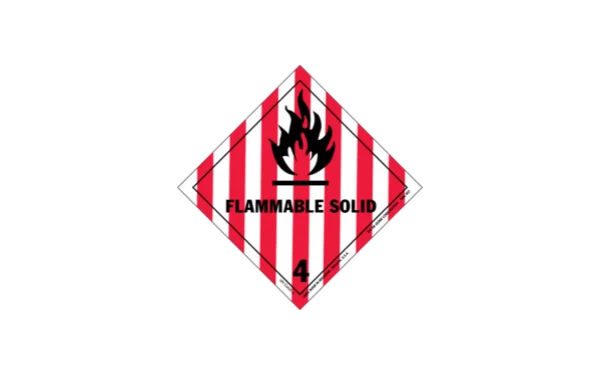
Flammable solids are solid substances that are prone to ignition, react spontaneously, or emit flammable gases upon contact with water. Class 4 is divided into 3 divisions, each with a distinct hazard profile:
| Division | Hazard Type |
Examples |
| 4.1 | Flammable solids | Aluminum powder, coal, celluloid film, magnesium powder, matches |
| 4.2 | Substances liable to spontaneous combustion | White phosphorus, activated charcoal, oxidized vegetable oil |
| 4.3 | Substances that emit flammable gases on contact with water | Dry sodium, dry potassium, calcium carbide, dry zirconium |
Class 5: Oxidizing Substances & Organic Peroxides
Oxidizing substances and organic peroxides are materials that can cause or accelerate the outbreak of fire by releasing oxygen, even without an external ignition source.
Class 5 is divided into 2 divisions:
Division 5.1 (Oxidizing Agents)
Substances that release oxygen and intensify fires when they react with combustible materials. Examples: Sodium chlorate, hydrogen peroxide solution, ammonium nitrate
Division 5.2 (Organic Peroxides)
Substances capable of self-oxidation that may undergo exothermic reactions at normal temperatures. Examples: Benzoyl peroxide, cumene hydroperoxide, di-tert-butyl peroxide
Class 6: Toxic & Infectious Substances

Toxic and infectious substances fall under a single class (Class 6) consisting of two divisions, not two separate classes. This is one of the most complex classifications in the IMDG Code.
Division 6.1 (Toxic Substances)
Substances that can cause death or serious injury to health, even at low concentrations, whether through inhalation, ingestion, or skin contact.
Examples:
- Hydrogen cyanide
- Chloroform
- Mercury compounds (mercuric chloride)
- Pesticides, arsenic trichloride, methanol, benzene
Division 6.2 (Infectious Substances)
Materials containing pathogens (bacteria, viruses, parasites, or fungi) that can cause serious disease in humans or animals.
Examples:
- Tuberculosis bacterial cultures and other pathogenic microorganisms
- Diagnostic specimens (blood samples for disease testing)
- Vaccines containing live pathogens
- Genetically modified bacteria for research purposes
- Botulinum toxin
- Medical waste containing infectious materials
- Carcasses of animals infected with communicable diseases
Class 7: Radioactive Materials
Radioactive materials are substances that emit ionizing radiation, which poses serious risks to human health and safety. Their transport is subject to highly stringent requirements covering packaging, labeling, and documentation.
Common examples of radioactive materials transported by sea:
- Uranium hexafluoride and thorium (nuclear industry)
- Plutonium and neptunium (nuclear materials)
- Technetium-99m, americium-241, cesium-137 (medical and research)
- Californium-252 (industrial and research)
- Irradiated nuclear materials and radioactive waste
Class 8: Corrosive Substances

Corrosive substances are materials capable of causing severe damage to living tissue (skin, eyes, mucous membranes), other cargo, or transport vessels through chemical reactions.
Commonly transported corrosive substances include:
- Strong acids: Sulfuric acid, hydrochloric acid, nitric acid
- Strong bases: Sodium hydroxide (caustic soda)
Class 9: Miscellaneous Dangerous Goods
Miscellaneous dangerous goods encompass all substances, materials, or articles that present a hazard during transport but do not fall within any of the previous eight classes. This class is often overlooked, yet it is one of the 9 official IMDG Code classes that must be fully complied with.
Examples of Class 9 dangerous goods:
- Lithium batteries (fire and explosion risk)
- Dry ice (asphyxiation risk from CO₂ release)
- Motor vehicles containing fuel
- Magnetized materials that can interfere with navigation instruments
- Environmentally hazardous substances that still pose risks during transport
- Marine pollutants classified as harmful to ecosystems
ISO Tank Container Types by Dangerous Goods Class
Once you understand the 9 classes of dangerous goods, the next step is selecting the right ISO Tank Container for transport. An ISO Tank Container is an internationally standardized portable tank specifically designed for the safe carriage of hazardous cargo.
General Specifications of ISO Tank Containers
- Material: Stainless steel, carbon steel, or composite materials
- Frame: ISO-standard steel frame
- Capacity: 14,000 to 36,000 liters
- Additional features: Insulation lining and protective outer coating
Portable Tank Selection Guide by Dangerous Goods Class
|
Tank Type |
Application |
| T1 to T22 | Classes 1, 3, 4, 5, 6, 8, 9 (liquid and solid dangerous goods, excluding Class 7) |
| T23 | Class 4.1 (flammable solids) and Class 5.2 (organic peroxides) |
| T50 | Non-refrigerated liquefied gases and chemicals under pressure |
| T75 | Refrigerated liquefied gases and chemicals under pressure |
For more detailed information and recommendations on the ideal ISO Tank Container for your cargo, fill out the online form available on the KontainerIndonesia.co.id page.
FAQ
How Many Classes of Dangerous Goods are There under the IMDG Code?
There are 9 classes of dangerous goods under the IMDG Code: Class 1 (Explosives), Class 2 (Gases), Class 3 (Flammable Liquids), Class 4 (Flammable Solids), Class 5 (Oxidizing Substances & Organic Peroxides), Class 6 (Toxic & Infectious Substances), Class 7 (Radioactive Materials), Class 8 (Corrosive Substances), and Class 9 (Miscellaneous Dangerous Goods).
What is the Difference between Class 6.1 and Class 6.2 in the IMDG Code?
Class 6.1 covers Toxic Substances that can cause death or serious health damage through chemical exposure. Class 6.2 covers Infectious Substances containing pathogens that cause disease. Both are divisions within a single class (Class 6), not two separate classes.
What Falls under Class 9 Dangerous Goods in the IMDG Code?
Class 9 covers dangerous goods that do not fit into the other eight classes but still present a risk during transport. Examples include lithium batteries, dry ice, motor vehicles containing fuel, magnetized materials, and certain marine pollutants.
Are Lithium Batteries Considered Dangerous Goods?
Yes. Lithium batteries are classified as Class 9 dangerous goods under the IMDG Code because they can undergo thermal runaway (an uncontrolled heat reaction) leading to fire or explosion if damaged, short-circuited, or improperly packed. Their shipment requires specialized packaging and documentation.
What Documents are Required When Transporting Dangerous Goods?
Every shipment of dangerous goods must be accompanied by the following:
- Dangerous Goods Declaration (DGD): a declaration stating the type and quantity of dangerous goods
- Packing Certificate: confirming the goods are packed in accordance with IMDG standards
- MSDS (Material Safety Data Sheet): a safety data sheet for the material
- UN Number: the international identification code for each type of dangerous good
What is a Un Number In The IMDG Code?
A UN Number is a 4-digit identification code assigned by the United Nations to each type of dangerous good. It must appear on packaging and shipping documents to enable identification by all parties involved, including emergency response teams in the event of an accident.
What Type of ISO Tank is Used for Radioactive Materials (Class 7)?
Radioactive materials (Class 7) are not transported using the standard portable tanks T1 to T22. Their transport requires specialized packaging and containers that comply with international radiation safety standards regulated by the IAEA (International Atomic Energy Agency) and the IMO.
How do I Determine the Dangerous Goods Class of a Product?
To identify the dangerous goods class of a product, check its MSDS (Material Safety Data Sheet) or SDS (Safety Data Sheet). The document will specify the hazard class, UN Number, and applicable transport requirements under the IMDG Code.