 Indonesia
Have you ever noticed the series of letters and numbers printed in large characters on a container door? It is not a random code. That is the shipping container number, a unique identifier that serves as the “ID card” of a freight container anywhere in the world.
A shipping container number is a unique alphanumeric code consisting of 11 characters: 4 letters and 7 digits. It is standardized internationally through ISO 6346 and managed by the Bureau International des Containers (BIC). Its functions include owner identification, position tracking, and validation of export-import documents.
Daftar isi
- 1 What Is a Shipping Container Number?
- 2 How to Read a Shipping Container Number
- 3 How to Read the Size and Type Code Below the Container Number
- 4 The Placement of Shipping Container Numbers on Different Sides
- 5 Why Does the Shipping Container Number Matter?
- 6 Where Can the Shipping Container Number Be Found?
- 7 Get ISO Standard Shipping Containers at Tradecorp
- 8 FAQ
What Is a Shipping Container Number?
Best Shipping Containers for Transport Cargo Safely


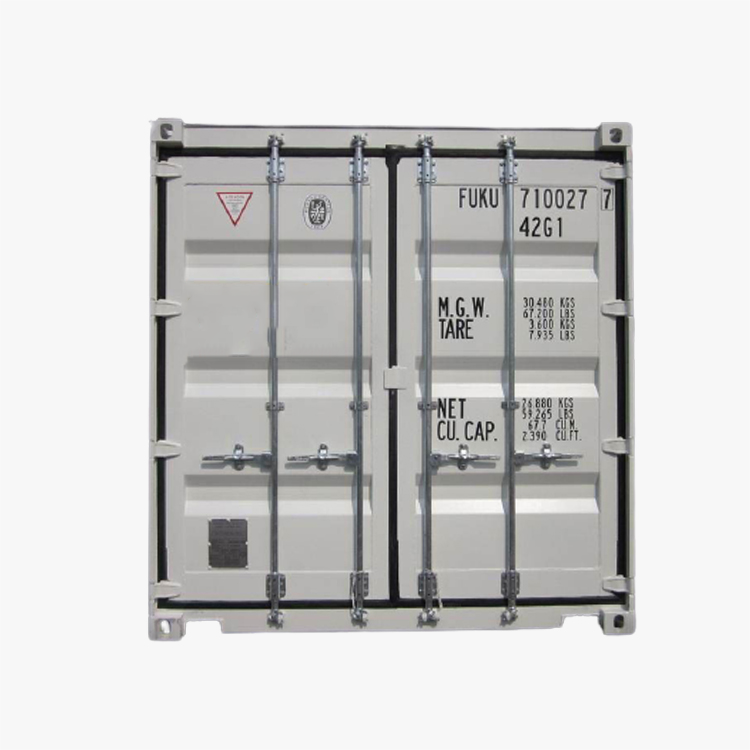

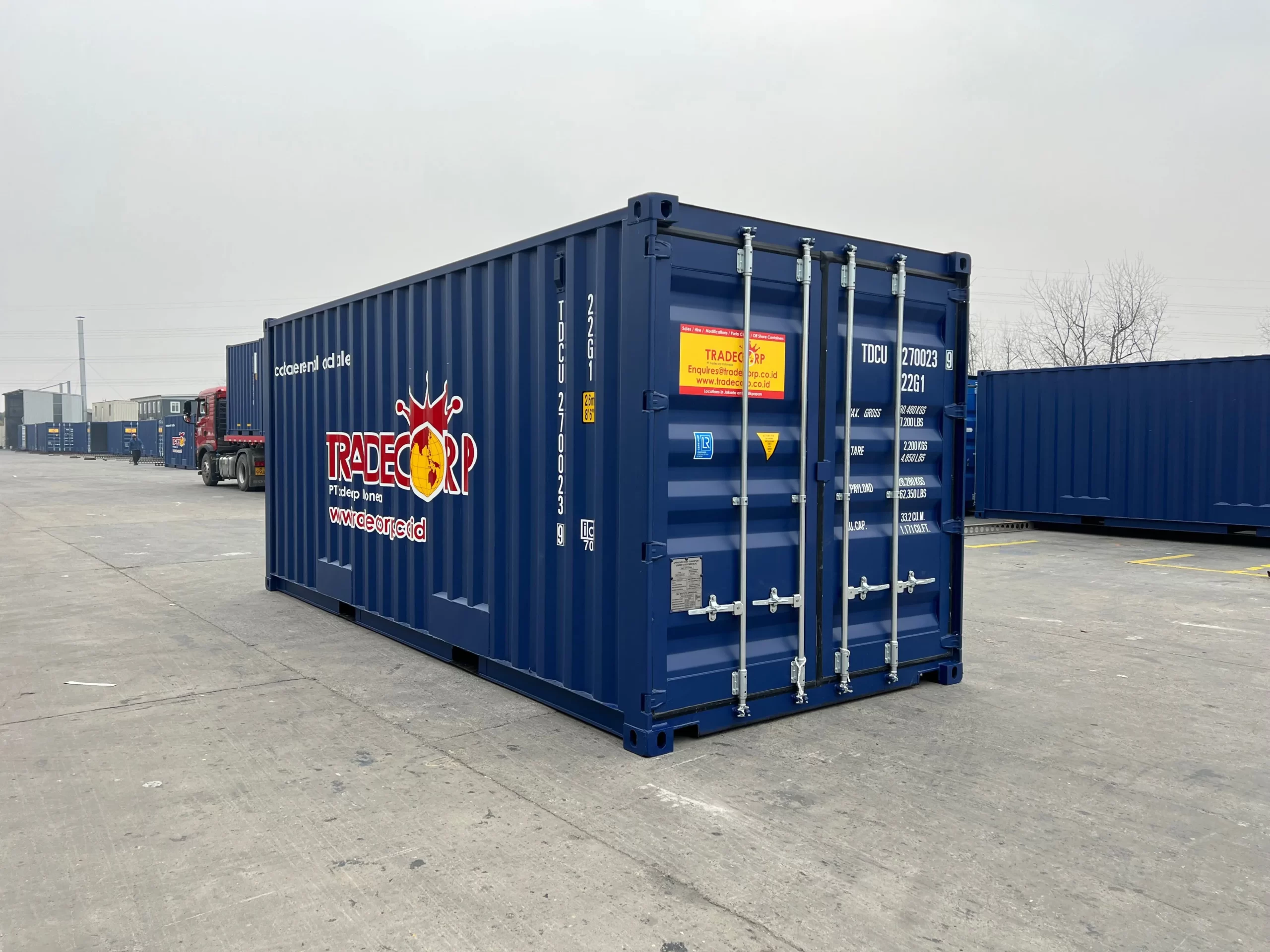

A shipping container number is a standardized identification system governed by ISO 6346, an international standard published by the International Organization for Standardization (ISO). The current version in force is ISO 6346:2022.
The code is administered by the Bureau International des Containers (BIC), an organization established in 1933 under the initiative of the International Chamber of Commerce (ICC). BIC is responsible for registering the owner prefix of each container owner to prevent duplicate codes across companies worldwide.
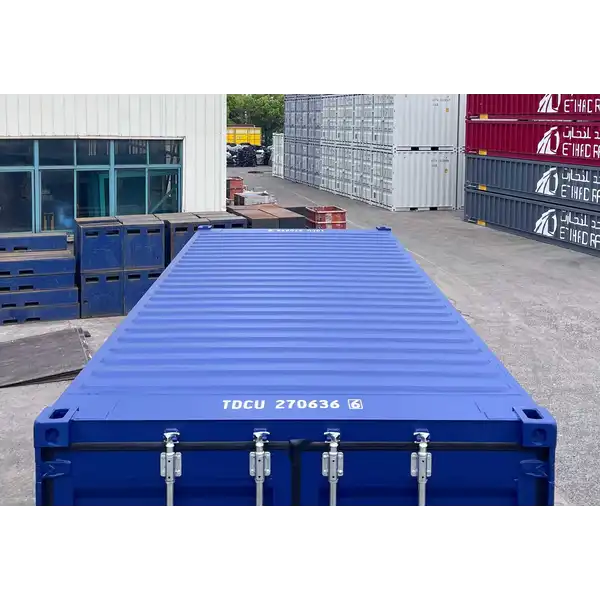
The number is marked on several sides of the container: the door panel, the left and right sides of the body, and the top. This multi-point placement makes identification straightforward from any angle at a port terminal.
How to Read a Shipping Container Number
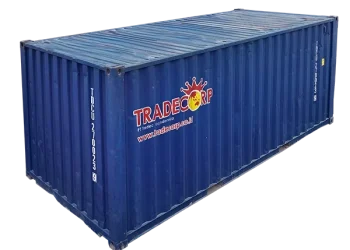
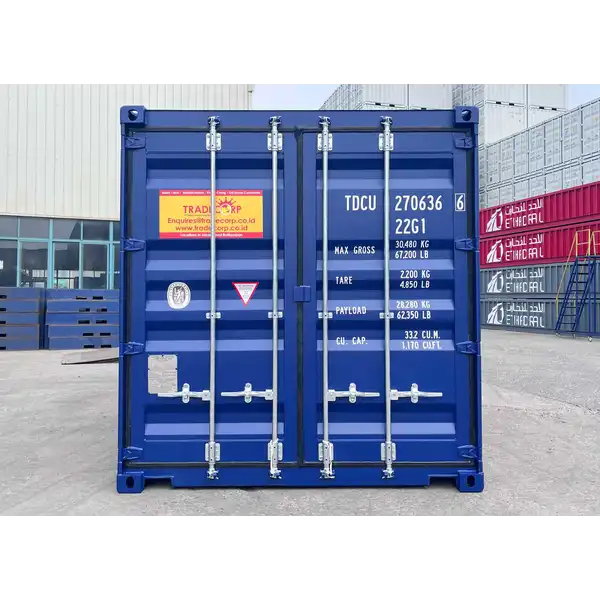
Let us break it down using a real example: the container number belonging to Tradecorp Indonesia, which is TDCU 270636 6.
|
Component |
Example |
Description |
| Owner Prefix (3 letters) | TDC | The owner/operator code. Registered and managed by BIC to prevent duplication. |
| Equipment Identifier (1 letter) | U | U = all freight containers, J = detachable equipment, Z = trailers and chassis. |
| Serial Number (6 digits) | 270636 | A unique 6-digit number assigned by the container owner. One prefix allows up to 999,999 serial number combinations. |
| Check Digit (1 digit) | 6 | A mathematically calculated validation digit that ensures the accuracy of the entire code. |
1. Owner Prefix: TDC
The first three letters are the owner prefix, a unique code that identifies the company that owns or operates the container. This code is officially registered with BIC and is guaranteed to be unique to each company worldwide.
TDC is the owner prefix registered under Tradecorp Indonesia. You can verify the ownership of this prefix directly at www.bic-code.org by entering the code in the search field provided.
2. Equipment Identifier: U
The fourth letter is the equipment identifier, which indicates the category of the container equipment. Three codes are used internationally:
- U, for all freight containers (cargo-carrying containers)
- J, for detachable freight container-related equipment, such as generator sets
- Z, for trailers and chassis
Nearly all shipping containers you encounter at a port carry the code U.
3. Serial Number: 270636
The next six digits are the serial number, a unique sequence that distinguishes one container from another within the same company’s fleet. The serial number is assigned directly by the container owner, not by BIC.
BIC provides a Check Digit Calculator on its official website. It is important to note that this tool is not used to generate serial numbers. It is used solely to calculate and validate the check digit based on an existing owner prefix and serial number.
4. Check Digit: 6
The final digit of a shipping container number is the check digit. It is calculated using a mathematical algorithm applied to all preceding characters, covering the owner prefix, equipment identifier, and serial number.
Its purpose is to ensure no input errors occur when the container number is entered into a system. If even one character is typed incorrectly, the check digit will not match and the system will automatically reject the number.
How to Read the Size and Type Code Below the Container Number
Below the container number, you will find an additional code made up of numbers and letters that describes the dimensions and type of the container. This is called the Size and Type Code.
As an example, Tradecorp Indonesia’s container TDCU 270636 6 displays the code 22G1. Here is how to read it:
|
Position |
Example (22G1) |
Meaning |
| 1st digit | 2 | Container length. Code 2 means 20 feet. |
| 2nd digit | 2 | Container height. Code 2 means 8 feet 6 inches (standard height). |
| 3rd & 4th characters | G1 | Container type. G1 means General Purpose Container with passive vents at the upper part of the cargo space. |
The Placement of Shipping Container Numbers on Different Sides
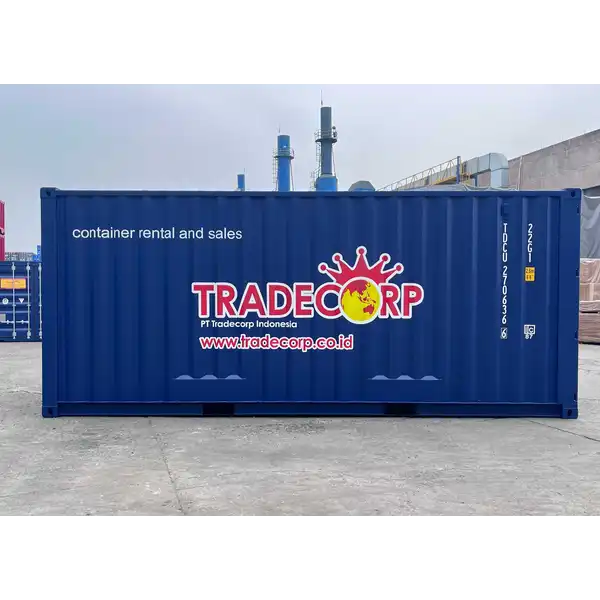
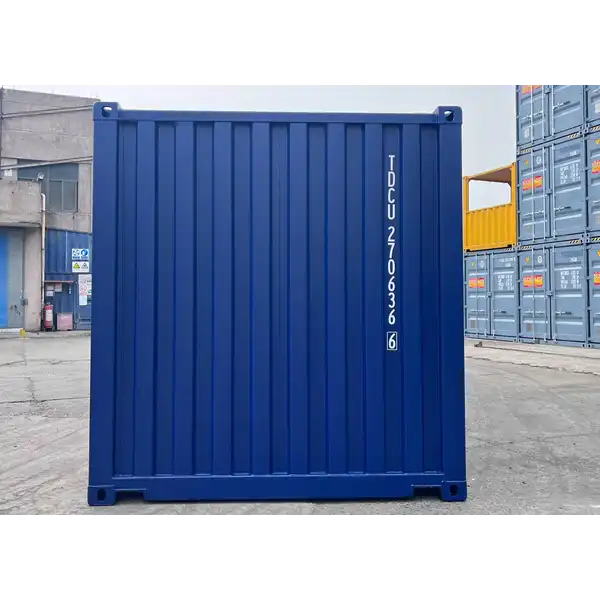
Why Does the Shipping Container Number Matter?
A shipping container number is far more than an administrative label. In global logistics operations, it is the backbone of the entire cargo tracking and management system.
- Unique identification: ensures every container can be specifically recognized wherever it is located, from Tanjung Priok to Rotterdam.
- Real-time tracking: the number underpins the online tracking systems provided by shipping lines such as Maersk, CMA CGM, MSC, and Hapag-Lloyd.
- Export-import documentation: the container number must be stated in the Bill of Lading (B/L), cargo manifest, and delivery order.
- Cargo security: helps detect containers that have been misrouted or do not match their documentation.
- Terminal efficiency: port operators use the number to manage loading, stacking, and container release systematically.
Where Can the Shipping Container Number Be Found?
The shipping container number is printed in multiple locations on the container body to ensure visibility from every position:
- The rear door panel, the most common location, usually accompanied by capacity and weight information.
- The right and left sides of the container body, in large lettering visible from a distance.
- The top of the container, for identification by cranes or forklifts at the terminal.
This consistent placement across multiple surfaces ensures a container can be identified quickly from any point within a port or depot.
Get ISO Standard Shipping Containers at Tradecorp
Tradecorp Indonesia is a trusted provider and supplier of shipping containers, modified containers, prefabricated modular buildings, and light gauge steel (LGS) construction. All shipping containers offered by Tradecorp Indonesia are ISO-certified, ensuring they meet international standards for cargo transportation and handling.
Each container provided by Tradecorp also complies with BIC standards, including the proper display of the shipping container number, container code, and other essential information as regulated.
Here are the types of ISO-certified shipping containers available at Tradecorp Indonesia:
- General Purpose or Dry Containers
- Side Opening Containers
- Open Top Containers
- Flat Rack Containers
- Offshore DNV Containers
- Refrigerated (Reefer) Containers
- ISO Tank Containers
For more information, please fill out the online form on our website, and our team will contact you shortly!
Best Shipping Containers for Transport Cargo Safely
FAQ
How Many Digits Does A Shipping Container Number Have?
A shipping container number consists of 11 characters in total: 4 letters (3-letter owner prefix and 1-letter equipment identifier) and 7 digits (6-digit serial number and 1 check digit). This standard format is governed by ISO 6346.
What is The Function of The Check Digit on a Shipping Container Number?
The check digit is a validation digit at the final position of the container number. It is calculated mathematically from all preceding characters. If even one character is entered incorrectly, the system will immediately reject the number because the check digit will not match.
How Do I track a Shipping Container Number Online?
To track the location of a container online, visit the website of the shipping line handling your cargo, such as Maersk, CMA CGM, MSC, or Hapag-Lloyd, and enter the container number in the Container Tracking field. Third-party tracking platforms that support multiple shipping lines simultaneously are also available.
Can a Shipping Container Number Change?
No. A shipping container number is permanent throughout the container’s service life. What changes with each shipment is the seal number (security seal), not the container number itself.
What is The Difference Between a Container Number and a Seal Number?
The container number is a permanent identity assigned to the container from the moment it is manufactured and never changes. The seal number is a security seal number attached to the container door for each individual shipment and replaced every time a new journey begins.
What Is an Owner Prefix and How Do I Check It?
The owner prefix is the first three letters of a shipping container number that identifies the company owning or operating the container. To verify the owner of a given prefix, visit www.bic-code.org and enter the prefix code in the search field on the BIC official website.
Who Determines The Serial Number on a Shipping Container Number?
The serial number is determined by the container owner or operator directly, not by BIC. Each owner prefix allows up to 999,999 unique serial number combinations. BIC only provides the Check Digit Calculator to validate the verification digit at the end of the number.
What Does The Code 22G1 Mean on a Container?
22G1 is a Size and Type Code that describes the container’s specifications. The first digit ‘2’ indicates a length of 20 feet, the second digit ‘2’ indicates a standard height of 8 feet 6 inches, and ‘G1’ identifies the container as a General Purpose Container (dry container) with passive vents at the upper part of the cargo space.